September 10, 2026
How to Plan a Charging Network in a Municipality: Where to Install Charging Stations and What Power Rating to Choose

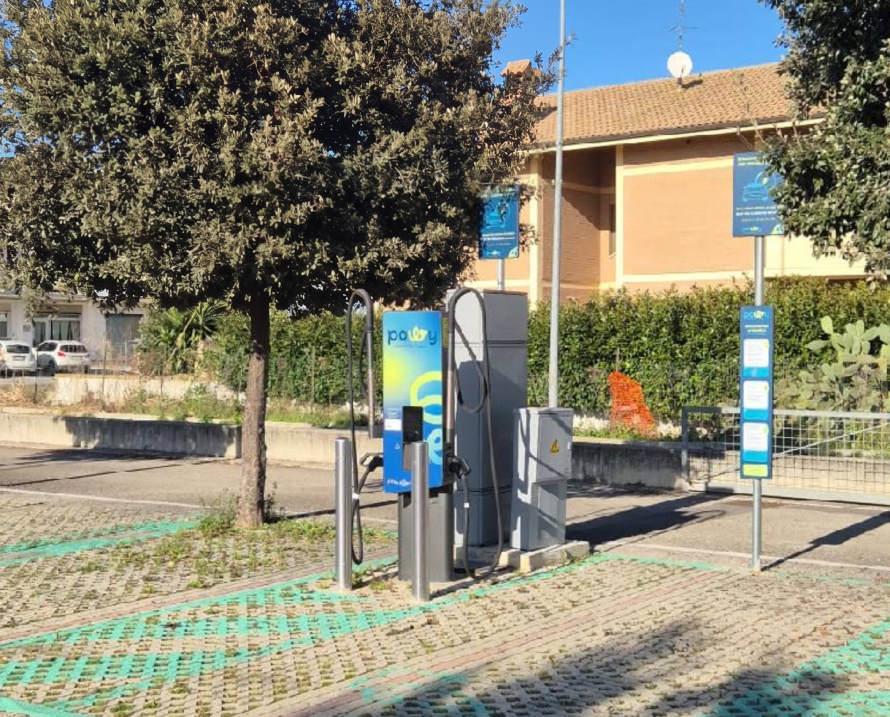


Designing a public charging infrastructure isn’t simply a matter of “installing charging stations”; it involves planning a service that integrates with traffic patterns, residents’ habits, and the capacity of the local power grid. Today, many municipalities are facing a growing demand for electric mobility, driven in part by the objectives of the European AFIR regulation.
But how does a local government determine how many charging stations are actually needed in the area, where to locate them, and what charging capacity to authorize? In this article, we’ll analyze some technical, urban planning, and operational criteria for properly sizing a public charging network, optimizing space, and ensuring an efficient service for EV drivers.
The first step for a public administration is to analyze demand. The need for charging stations is not uniform: it depends on population density, the presence of major attractions (hospitals, stadiums, shopping centers), and the nature of traffic flows (commuting, tourism, through traffic).
To avoid installing infrastructure that will remain unused or, conversely, be insufficient to meet demand, it is necessary to map the territory by cross-referencing three sets of data:
The most common mistake in designing a public network is failing to align the infrastructure’s capacity with the average dwell time in a given area. There is no single “best” charging station, but there is the right technology for each specific use case.
The general rule is: the station's power should be selected based on the expected dwell time.
| Type of Area | Parking Duration | Recommended Technology |
|---|---|---|
| Residential Areas | Long (8–12 hours, mostly at night) | AC: 7–22 kW |
| Offices, park-and-ride facilities, historic districts | Medium (2–4 hours) | AC or DC: 11–50 kW |
| High-traffic roads, logistics hubs | Short (15–40 minutes) | DC/HPC: 100–300+ kW |
Installing a charging station with a capacity of over 150 kW in a purely residential area might be overkill given users’ needs and could result in higher costs and greater complexity when connecting to the grid. In these settings, where parking durations are generally long, a “ AC ” solution may be more suitable.
Once the area and capacity have been identified, determining the exact location ( siting) requires specific technical evaluations. The feasibility of an installation depends heavily on the availability and characteristics of the local power grid and on the proximity to connection points.
A CPO (Charge Point Operator—the company that typically installs and manages the charging station) will evaluate:
Practical example: A municipality decides to renovate a historic square and wants to install four charging stations. Although there is demand from tourists, the cultural heritage authority prohibits invasive excavation, and the nearest electrical substation does not have sufficient power for stations at DC. The optimal solution would be to install stations at AC with a compact design, which require a simpler and less disruptive low-voltage connection.
There is no universal algorithm for calculating the perfect number of moves, since much depends on local variables. However, a well-established methodological approach involves a modular and scalable implementation.
Rather than immediately overcrowding the area, it is advisable to:
For a public administration, a charging network can be installed using various models. One model that is frequently adopted is the granting of public land to a CPO.
In this scenario:
Designing an urban charging network requires striking a balance between urban planning requirements, infrastructure constraints, and the actual needs of drivers. Relying on traffic data analysis and collaborating with specialized operators from the earliest stages allows municipalities to avoid building “white elephants,” ensuring an infrastructure that is scalable and tailored to parking durations.
Powy Powy supports public administrations throughout the entire process—from feasibility studies to operational management—at no cost to the agency. Discover ’s solutions for public administrations and request an assessment for your area.
If the municipality opts for the concession model with a CPO operator, the cost to the municipality is zero.
Yes. Idling at a charging station can be discouraged by charging an idle fee after the charging session ends. Many CPO operators already use this system, allowing for a grace period after the charging session ends and charging an additional fee for the time the vehicle remains connected to the charging station.
The management of maintenance and restoration work generally falls under the responsibility of the CPO that operates the infrastructure, in accordance with the provisions of the concession agreement. The agreements may also establish specific timeframes (SLAs) for restoring service.
Methodological Note: The examples and values provided are for illustrative purposes only. Each project requires a specific technical and energy feasibility analysis.

Powy a company that owns, develops, and manages Italy's leading independent network of public charging infrastructure for electric vehicles.
Founded in Turin, Italy in 2018, Powy is at the center of the transition to more sustainable mobility, offering an innovative charging infrastructure that uses only 100 percent renewable energy.
Powy 's network includes quick, fast, and ultra-fast charging solutions strategically placed in public and private parking lots, supermarkets, shopping malls, and transportation hubs to ensure maximum convenience and accessibility for EV drivers. Each station is equipped with advanced technologies to provide a reliable and efficient charging experience.
Press Office: press@powy.energy