September 19, 2026
Charging Stations for Hotels: How Many to Install, What Power Rating to Choose, and Where to Place Them

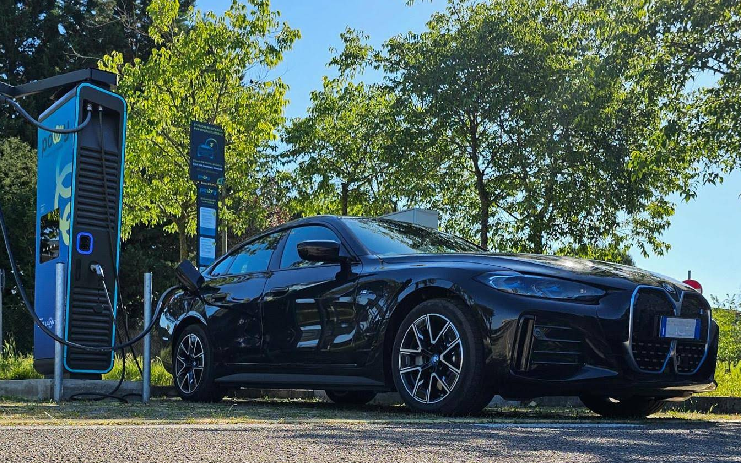


The availability of electric vehicle charging stations has become an increasingly important service for lodging facilities. In fact, the presence of a charging station is one of the criteria guests use when searching for and selecting a lodging facility, including through major booking websites.
For hotel managers, facility managers, and purchasing managers at hotel chains, however, the project involves more than just the physical installation. They must assess expected demand, length of stay, available power capacity, the location of the charging stations, and, above all, the economic and operational model.
Here are the 10 key points for designing an efficient, scalable, and profitable infrastructure:
Properly sizing the service means striking a balance between expected demand and infrastructure capacity. Oversizing wastes financial resources, while an undersized infrastructure leads to constantly full parking spaces and negative reviews.
To estimate actual needs, it is helpful to analyze the following factors:
Practical tip: Instead of automatically allocating a fixed percentage of parking spaces for charging, the best strategy is often to start with a modest initial installation, accompanied from the outset by the necessary infrastructure to add new charging stations in the future without the need for additional excavation work.
The charging technology should be chosen based on how long the vehicle remains parked and the service the hotel intends to offer:
Charging stations share the power infrastructure with the hotel’s other critical power consumers, such as air conditioning, kitchens, lighting, and elevators. Before installation, it is essential to review the building’s energy consumption profile and evaluate two options:
The placement of the stations has a significant impact on both installation costs and the guest experience:
In the electric mobility sector, two key roles come into play:
Added to these is the concept of roaming—that is, interoperability between different networks. Thanks to this, an international guest can arrive at your hotel and activate the charging station using the app from the provider they already use in their home country. A specialized partner automatically manages this software integration, eliminating any operational complexity for the hotel front desk.
Another strategic decision concerns the accessibility of the parking spaces:
For a hotel, installing charging stations should not mean turning the front-of-house staff or the front desk into a technical support center. By entrusting the system to an experienced CPO, the operator will take care of:
There is no single business model for equipping a hotel with charging infrastructure. Depending on the agreements with the operator, the main options are:
There is no standard price. Always be wary of quotes based solely on the cost of the charging station (the hardware). A true engineering project calculates a total cost that includes:
A preliminary technical inspection is the only reliable way to determine which repairs are truly necessary.
Setting up a charging station requires technical, systems engineering, digital, and contractual expertise. It’s not just a matter of buying an appliance—it’s about designing an ecosystem. In fact, you have to decide:
Working with an experienced provider allows you to bring all these elements together into a single “turnkey” project, relieving the hotel of any technical or bureaucratic risks.
Designing a hotel charging system means balancing demand, parking duration, and available power. The best solution often involvesa scalable setup: starting with AC charging points for overnight guests and supplementing them with DC stations for short-term parking or non-hotel guests.
The use of load balancing, remote monitoring, and roaming services helps make the infrastructure efficient, transparent, and easy to manage, transforming a technological tool into a competitive advantage.
Would you like to equip your hotel or hotel chain with charging stations?
Powy We offer turnkey solutions for the hospitality industry, with a variety of contract options designed to meet the needs of every property. Discover our solutions for hotels and lodging facilities, or read our success story with ABBA Hotels.
There is no one-size-fits-all number for all facilities. The appropriate size depends on the number of rooms and parking spaces, occupancy, average length of stay, type of guests, expected demand, and available capacity.
It depends on the length of the stay. The “AC ” option is generally suitable for guests who leave their cars for many hours or overnight; the “ DC ” option can be useful when more energy needs to be supplied quickly, for example, to outside visitors or at transit facilities.
Not necessarily. A dynamic load management (DLB) system can adjust the power allocated for charging based on the building’s energy consumption. However, the need to increase the available power must always be verified through a technical analysis of the system.
Yes, if the facility chooses to make the service accessible to the public as well. This setup is strategic for hotels with restaurants, spas, bars, meeting rooms, or other facilities open to visitors.
When the service is contracted to a CPO, operational management and maintenance are included. The CPO is responsible for ensuring the proper operation of the charging station and providing support for it.
Yes, when there are roaming agreements between the CPO and the user’s Mobility Service Provider (MSP). Interoperability allows the user to use their subscription or mobility services on infrastructure managed by different operators.

Powy a company that owns, develops, and manages Italy's leading independent network of public charging infrastructure for electric vehicles.
Founded in Turin in 2018, Powy is at the forefront of the transition to more sustainable mobility, offering an innovative charging infrastructure that uses only renewable energy.
Powy 's network includes quick, fast, and ultra-fast charging solutions strategically placed in public and private parking lots, supermarkets, shopping malls, and transportation hubs to ensure maximum convenience and accessibility for EV drivers. Each station is equipped with advanced technologies to provide a reliable and efficient charging experience.
Press Office: press@powy.energy