Published on
Installing charging stations for businesses: everything you need to know before you start

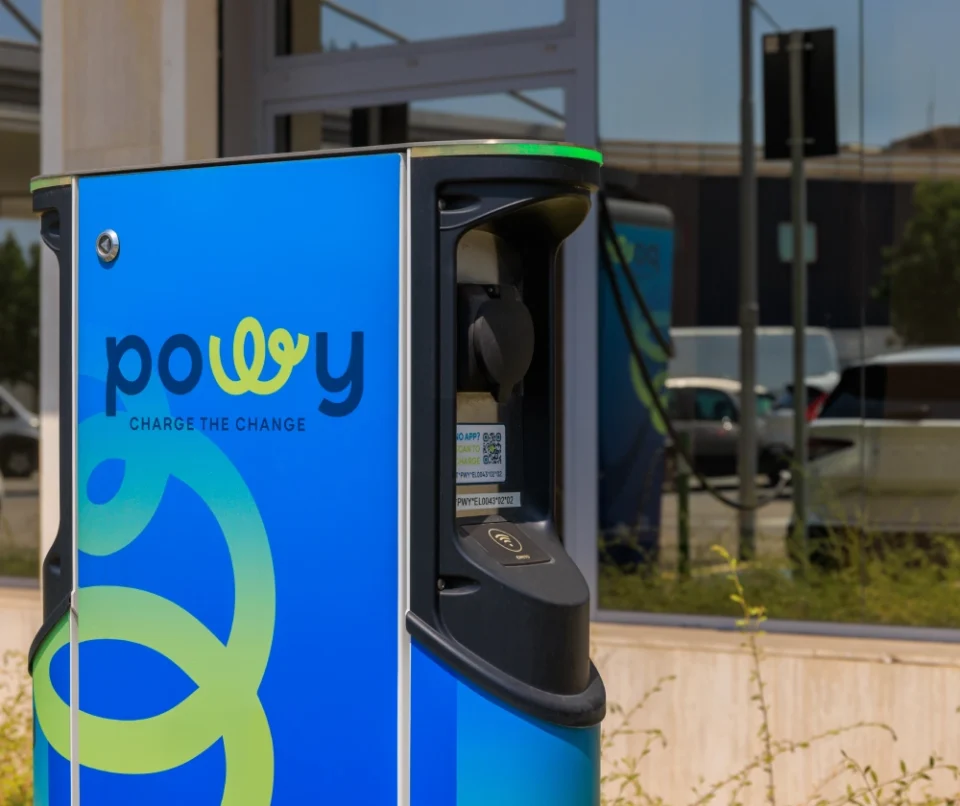


The installation of Charging Stations in the workplace has become a concrete priority for a growing number of Italian companies. It is not just a matter of keeping up with the times: offeringcharging infrastructuremeans responding to a real need of employees, optimizing the management ofelectric fleets, and positioning the company as a sustainable and modern entity. Before starting the project, however, it is essential to understand thetechnical,regulatory, and managementrequirements to avoid costly mistakes and ensure an installation that really works in the long term.
In this article, we refer tocompaniesin the most traditional sense of the term: entities withprivate parking lotswith partially controlled access, dedicated to employees, collaborators, suppliers, and visitors. Therefore, we are not referring to hotels, restaurants, or facilities with a large flow of public access, contexts that deserve specific and different considerations.
There are many reasons why a company should invest incharging infrastructure, all of which have a tangible impact on the day-to-day running of the business. The first concernsemployees: more and more workers are drivingelectric vehicles, and the ability to charge during working hours has become a valuedbenefit, improving satisfaction, reducing logistical stress, and increasing staff loyalty. This benefit, incidentally, has relatively low costs compared to othercorporate welfare tools.
The second reason concernscompany fleets.The electrification of car fleetsis accelerating significantly, driven both by European emission reduction targets and by the economic advantages linked to lower operating costs compared to combustion engine vehicles. Havingcharging stations on siteis essential for the smooth operation of an electric fleet, ensuring that vehicles are always ready for use without external stops that take up time and reduce productivity.
There is also the aspect ofimage and reputation, which should not be underestimated. A company equipped withcharging infrastructurecommunicates a concrete commitment tosustainability, an increasingly important value in the choice of suppliers by large customers and in talent selection processes. Finally, thanks to the presence on the market of various specialized operators offering solutions atno costto the company, the process can be significantly optimized in economic terms, making the investment accessible to businesses of all sizes.
Before purchasing any equipment or proceeding with the work, it is essential to carry out a thoroughtechnical assessmentof theexistingelectrical system. This is the most critical step and often the most underestimated. Aqualified technicianmust check thepower availablein the electricity supply contract and determine whether it is sufficient to power one or morecharging stationswithout causing overloads.
Contractual poweris the maximum amount of energy that the company can draw from the grid. If the sum of the company's consumption (machinery,lighting,offices) added to the power of the new charging stations exceeds this limit,the meterwilltrip, resulting in operational interruptions. In many cases, adding charging stations requires a request foran increase in powerfrom the supplier, an operation that can take weeks and must be planned in advance.
Dynamic Load Management (DLM)is the technological solution that resolves this critical issue without the need to increase the contracted power: an intelligent system that automatically distributes the available power among theactive charging stations, reducing it when the building's overall consumption is high and increasing it during off-peak hours. For any installation withmore than 2-3 charging stations, DLM is not an option but an essential component.
Themain electrical panelalso needs to be thoroughly checked. Work may be required, such as addingdedicated disconnect switches,type B residual current devices(mandatory for EV charging circuits), and adequate protection. These adaptation works must be included inthe overallprojectbudgetfrom the planning stage.
Not all charging stations are suitable for all business contexts. The choice depends on who uses them, for how long, and how often.
Whatever power rating you choose, it is essential to opt forCE-certified charging stations equipped with anauthenticationsystem (RFID,app, or other methods) for access control, andsmart connectivityfor remote monitoring and consumption reporting.
Navigating the Italian legislative landscape may seem complex, but the current rules have a clear objective: to accelerate theenergy transitionby making companies the protagonists of change.
The main reference isLegislative Decree 48/2020, which transposedDirective (EU) 2018/844on the energy performance of buildings. This decree, amendingArticle 4, paragraph 1-bisofLegislative Decree 192/2005, introduced specific requirements for integratingelectric vehicle charging infrastructureinto buildings.
Specifically, fornew non-residential buildingsand those undergoingmajor renovationwithmore than 10 parking spaces, the following are required:
These obligations apply when the parking lot is inside or adjacent to the building and, in the case of renovation, only if the work also involves the parking lot or related electrical systems. The obligation also extends toexisting non-residential buildings with more than 20 parking spaces, for which the installation of at least one charging point was planned byJanuary 1, 2025.
It is worth noting thatLegislative Decree 48/2020does not amendLegislative Decree 257/2016, but refers to it as a reference for defining what a "charging point" is: it is therefore acoordination between the two decrees, not a formal amendment.
The above obligationsdo not applyin the following cases:
The regulatory framework was recently updated with theMinisterial Decree of October 28, 2025 (Minimum Requirements Decree), published inthe Official Gazette no. 283 of December 5, 2025, and effective as ofJune 3, 2026. This decree updates the minimum energy performance requirements for buildings; for technical details on charging infrastructure, please refer directly to the text and its annexes.
Fire safety is a particularly important issue. When charging systems are installed in businesses subject to fire safety checks, such as garages covered byPresidential Decree 151/2011, the guidelines set out inFire Department Circular No. 2 of November 5, 2018 must be followed. This circular distinguishes between two scenarios:
From a technical standpoint, the system must be installed in accordance withCEI 64-8, Section 722, which regulates circuits dedicated to charging electric vehicles. Upon completion of the work, the authorized installation company is required to issue aDeclaration of Conformity (DiCo)in accordance withMinisterial Decree 37/2008: a fundamental document certifying that the system complies with all applicable technical and safety standards.
A company that wants to equip itself with Charging Stations several options. It can choose to purchasethe hardwareindependently and rely on various technical experts for consulting, authorization processes, and installation, investing tens of thousands of euros right from the start. Or it can rely on specialized operators such as Powy, who cover one or more stages of the process, up to the complete management of the entire infrastructure.
Powy offersthree distinct modes, designed to meet different needs and budgets:
Whichever method you choose, the stages leading from idea to implementation typically follow this path:
Want to bringelectric chargingto your business without any worries? Powy will accompany you through every stage of the project: froma free technical inspectionto customized design,from certified installationto24/7 operational management.Contact us todayand discover the solution that best suits your business.
Disclaimer: The information contained in this article is for informational purposes only and refers to the regulatory and technical framework in force at the time of writing. Given the continuous evolution of the sector, the references cited may be subject to change.
There is no set rule, but the standard guideline is about one charging station for every two to three vehicles, taking into account that not all vehicles charge at the same time and that some charging may take place elsewhere. Analyzing the fleet’s usage patterns is the most accurate way to determine the optimal number.

Powy a company that owns, develops, and manages Italy's leading independent network of public charging infrastructure for electric vehicles.
Founded in Turin in 2018, Powy is at the forefront of the transition to more sustainable mobility, offering an innovative charging infrastructure that uses only renewable energy.
Powy 's network includes quick, fast, and ultra-fast charging solutions strategically placed in public and private parking lots, supermarkets, shopping malls, and transportation hubs to ensure maximum convenience and accessibility for EV drivers. Each station is equipped with advanced technologies to provide a reliable and efficient charging experience.
Press Office: press@powy.energy