


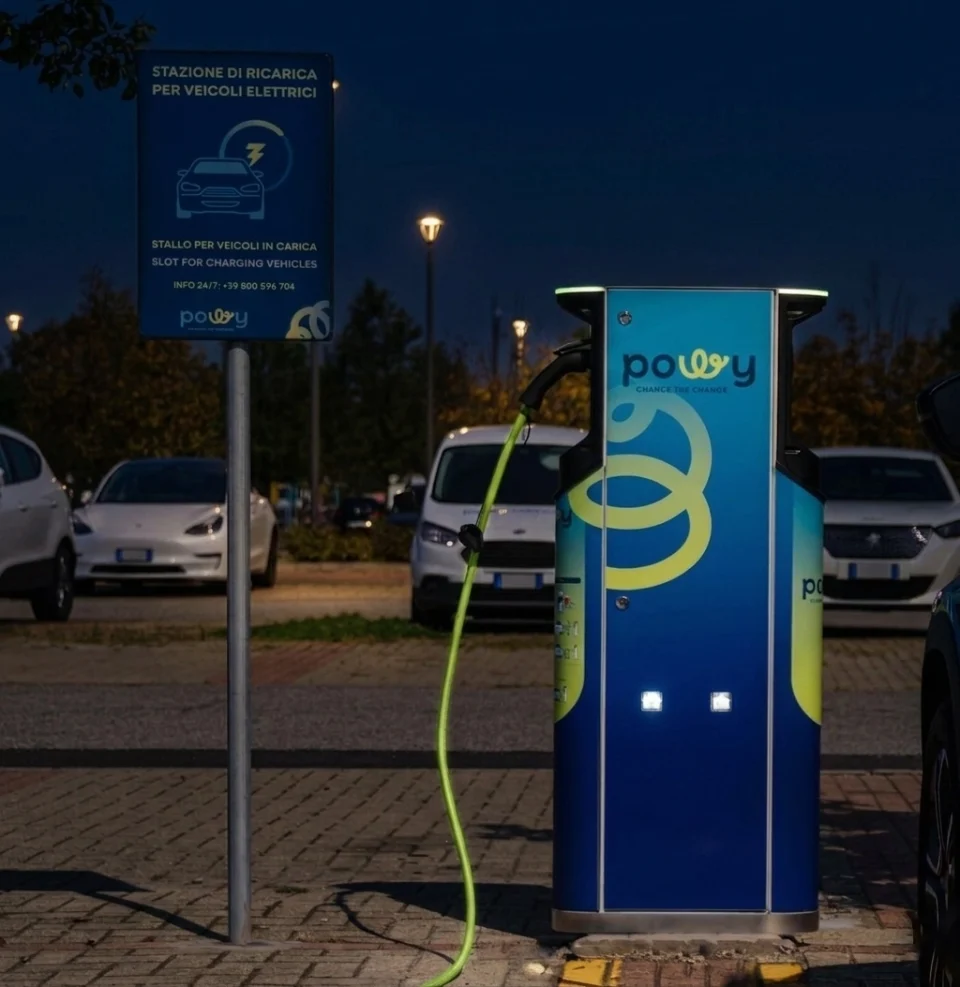
People who live in apartment buildings without private parking spaces find themselves in a situation that, until just a few years ago, posed a serious obstacle. Home charging—the slow, overnight, incredibly convenient kind—seemed like a privilege reserved for those with a garage. Today, that is no longer the case, thanks to a combination of updated regulations, expanding public charging networks, and tools that allow local governments to take direct action.
What the law says about the right to charge
In Italy, there is no law that explicitly uses the term “right to charge” as a standalone definition. However, the legal basis does exist:Article 1122-bis of the Civil Code, introduced by Law 220/2012, grants individual condominium owners the right to install charging stations at their own expense within their own unit, provided they comply with condominium regulations and ensure the safety of the building.
In practice, this means that anyone who owns a parking space or a private area can request the installation of a private charging station without facing unnecessary obstacles, provided that the work does not damage common areas and is technically sound.
What your local government can do
Many people are unaware that local governments play an active role in the installation of public charging stations and that citizens can request them. Some local governments have established formal procedures that allow residents to submit a specific address where they would like a charging station to be installed.
At the national level, the PNRR had set a target of 21,255 public charging stations distributed throughout the country—13,755 in urban centers and 7,500 along rural roads—with a budget of 713 million euros to cover up to 40% of the costs. The reality, however, is more complex: as of March 2026, only a portion of this infrastructure has actually been funded, an even smaller share has been installed, and approximately 15% of the charging stations already installed are not yet operational (source: DMove).
This means that municipalities have the necessary resources, but the process of implementing these plans on the ground still takes time. If there are no charging stations near your home in your neighborhood, you can:
- Report it to the mobility office at your local municipality.
- Contact operators such as Powy directly; they work with local governments to identify the most strategic locations.
- Check whether your municipality has already applied for PNRR grants and what stage the process is at.
Public overnight charging: does it really work?
Overnight charging at a public charging station is a viable option, provided you choose the right one. The 7.4- or 11-kW AC charging stations, which are becoming increasingly common in public parking lots, are specifically designed for extended charging sessions.
However, the most common are 22 kW chargers: in most cases, though, cars cannot take full advantage of them due to the limitations of the on-board charger (OBC), and instead charge at their maximum power rating, typically 7.4 or 11 kW. Most vehicles can still be fully charged in 6–8 hours .
The average cost at public charging stations ranges from €0.50 to €0.70 per kWh. Be sure to check the rates, though: some charge a parking fee for extended stays, an important detail to verify before leaving your car parked overnight.
The condominium parking space: an often-overlooked solution
If your apartment building has a shared parking area, you can install a shared charging station, with the cost split among all residents. All you need AC 7.4 kWAC power for slow overnight charging or 11–22 kW for faster charging, combined with a dynamic load management system to prevent overloads when multiple cars are plugged in at the same time.
For apartment buildings planning to install a shared system, there are often special incentives or rebates available.
A matter of habit, not of impossibility
People who don’t have a garage need to adjust their routine slightly compared to those who charge their cars in a garage, but they don’t have to give up on electric vehicles. The real game-changer comes when charging stops being a separate task and becomes part of what you already do: parking at home, at the supermarket, or at the office.
Powy works every day to make all of this possible: bringing charging stations to everyday locations, providing renewable energy, and offering an app that simplifies every charging session. Because access to electric mobility shouldn't depend on having a garage.
FAQ: If I don't have a garage, where can I charge my electric car at night?
The simplest solution is to use a public charging station near your home. However, if you own a parking space in your condominium, you have the right to install a private wallbox: all you need to do is notify the building manager in advance; no authorization from the homeowners’ association is required. For work on common areas, however, a simple majority resolution from the homeowners’ association is required, in accordance with applicable laws.
About Powy

Powy a company that owns, develops, and manages Italy's leading independent network of public charging infrastructure for electric vehicles.
Founded in Turin in 2018, Powy is at the forefront of the transition to more sustainable mobility, offering an innovative charging infrastructure that uses only renewable energy.
Powy 's network includes quick, fast, and ultra-fast charging solutions strategically placed in public and private parking lots, supermarkets, shopping malls, and transportation hubs to ensure maximum convenience and accessibility for EV drivers. Each station is equipped with advanced technologies to provide a reliable and efficient charging experience.
Press Office: press@powy.energy