May 5, 2026
Electric vehicle charging on the highway: why it’s still a concern (and what’s really changing)

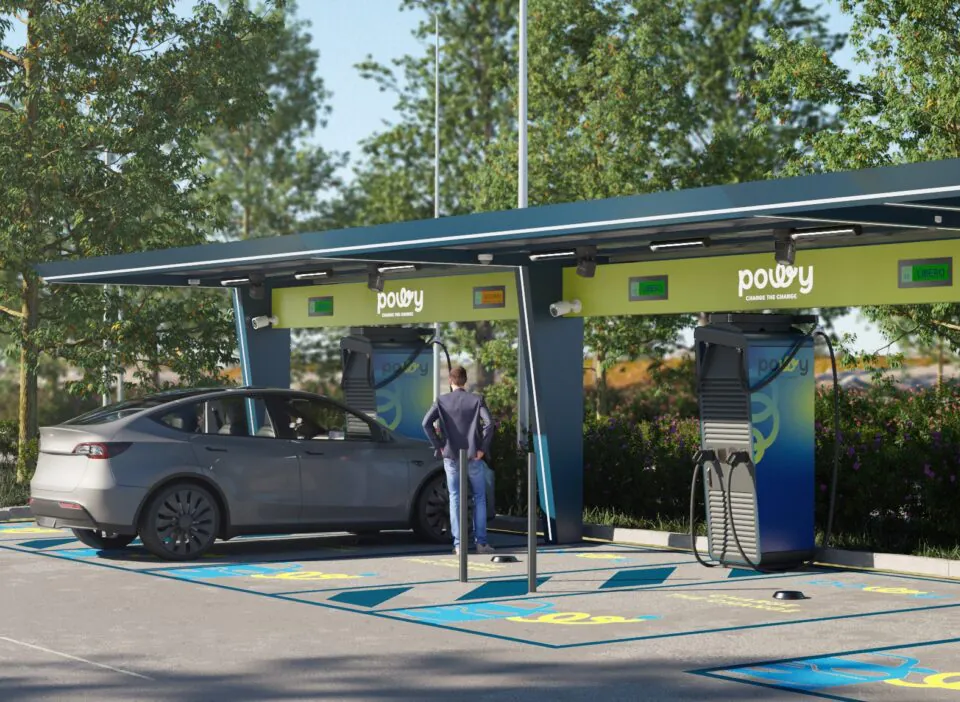


Driving an electric car on the highway.Even today, for many drivers, the thought of it still brings a certain amount of anxiety. The idea of getting stranded onthe A1 during the August holidaywith only2% battery lifeisn’t science fiction: it’s a scenario that someone has actually experienced, and it still weighs heavily on people’s perception of electric vehicles.
They call it“charging anxiety.” Your eyes drift to the dashboard, and the calculations start automatically: If I turn offthe air conditioning, will I make it to the next exit? If I slow down by ten kilometers per hour, will I regain enoughrange? It’s a mental loop that turns every long trip into an exercise in anxiety management, taking away much of the pleasure of driving.
This fear stems from real-life experiences that thousands of drivers have had in recent years. Until just a few years ago,charging stations along the highwaywere rare, often occupied, sometimes out of service, and other times listed on the app but effectively unreachable. Many have made unnecessary detours, been forced to stop at makeshift rest areas, and endured long waits in less-than-comfortable conditions. These experiences leave a lasting impression and still influence those who are considering switching to electric vehicles today.
The main problem wasn’t a lack of infrastructure, butthe unpredictability of the experience. A charging station listed as available might be out of service upon arrival, with no alternatives nearby. A shared hub might be occupied by cars already fully charged, parked there with no hurry to leave. In the absence ofshared standards, each operator had its own app, its own card, and its own payment system. To charge on the go with any peace of mind, you had to manage aportfolio of subscriptions that no driver would have expected to have to maintain.
Added to this was the issue ofrange communication. The ranges claimed by manufacturers, based onthe WLTP cycle, rarely matched real-world highway driving conditions: sustained speed, temperature, luggage weight, and air conditioning. A car claimed to have a range of500 kilometersmight drop to320 on the highwayin the summer. Manynew EV ownersfound themselves unprepared just when they needed it most. And that first negative experience is often enough to cement alasting prejudice, which is also passed on to those who haven’t yet bought an electric car but are considering it.
The situation today is fundamentally different. TheEuropean AFIR regulation, which takes effect in 2023 with phased deadlines extending through2026 and beyond, mandates one fast-charging stationevery sixty kilometers along the main corridors ofthe TEN-T network, with a guaranteed minimum power output andcontactless payment without mandatory registration. It is a regulatory requirement with specific deadlines, distinct from the voluntary targets that characterized the previous phase.
The results are already visible at highway rest stops: hubs with dozens of charging stations, often covered, accessible, and seamlessly integrated into regular travel breaks. You pull in, plug in the cable, and go grab a coffee. When you return, your car has charged enough to reach your destination. Thestop becomes a normal part of the trip, with no detours and no need to adjust your navigation settings.
Vehicles have also played a significant role. Next-generation navigation systemsautomatically plan charging stops, taking into account traffic conditions, outside temperature, and detected driving style. Theon-board computer handles the calculations.Ultra-fast 300-kW chargersthen allow drivers to regain hundreds of kilometers of range in the time it takes to drink an espresso.
It would be wrong to paint a picture devoid of challenges. The major highways innorthern Italyhave achieved essentially adequate coverage. However, onsecondary state roads,mountain routes, and sections incentral and southern Italy, the network still has significant gaps. For example, those traveling on theSalerno-Reggio Calabria highwayor on the inland roads ofSicily must plan with more flexibility and accept a degree of uncertainty that remains very real.
The issue isn’t just one of quantity. A network where15 percent of the charging stations are frequently out of serviceis objectively worth less than a smaller but more reliable network. The more established operators are focusing on quality and maintenance, but public perception changes slowly: every broken charging station encountered during a trip leaves a stronger impression than ten that work without a hitch.
This is where the contribution ofprivate entitiesbecomes significant. Hotels, shopping centers, rest areas along state highways: a charging station in the right location—near an interchange or on a high-traffic road—can make a real difference for travelers. Filling the gaps in the network doesn’t necessarily require being a major national operator. It requires being in the right place and deciding to invest.
The speed at which the network is completed also depends on the choices made by private individuals. Powy works to make this process accessible, both for drivers and for infrastructure operators. If you run a business, a transit area, or a facility nearstrategic hubs, you can attract a steady stream of travelers looking for a reliable place to stop.
Installing a charging station today isa real business opportunity, with demand set to grow alongside the number ofelectric vehicles on the road. Discover Powy solutions Powy installing Charging Stations help build a more robust network.
At high-power charging stations located at rest stops, a break of about twenty to thirty minutes is enough to charge the battery from 20% to 80%. Charging beyond this point takes longer, because the vehicle gradually reduces the charging rate to protect the battery cells from thermal degradation. The exact time depends on the car model, the battery temperature upon arrival, and the power output of the charging station. Click here to learn more.

Powy a company that owns, develops, and manages Italy's leading independent network of public charging infrastructure for electric vehicles.
Founded in Turin, Italy in 2018, Powy is at the center of the transition to more sustainable mobility, offering an innovative charging infrastructure that uses only 100 percent renewable energy.
Powy 's network includes quick, fast, and ultra-fast charging solutions strategically placed in public and private parking lots, supermarkets, shopping malls, and transportation hubs to ensure maximum convenience and accessibility for EV drivers. Each station is equipped with advanced technologies to provide a reliable and efficient charging experience.
Learn more: wpowy.energy