May 21, 2026
QR Codes in Electric Vehicle Charging: The Digital Shortcut to Convenience and Safety

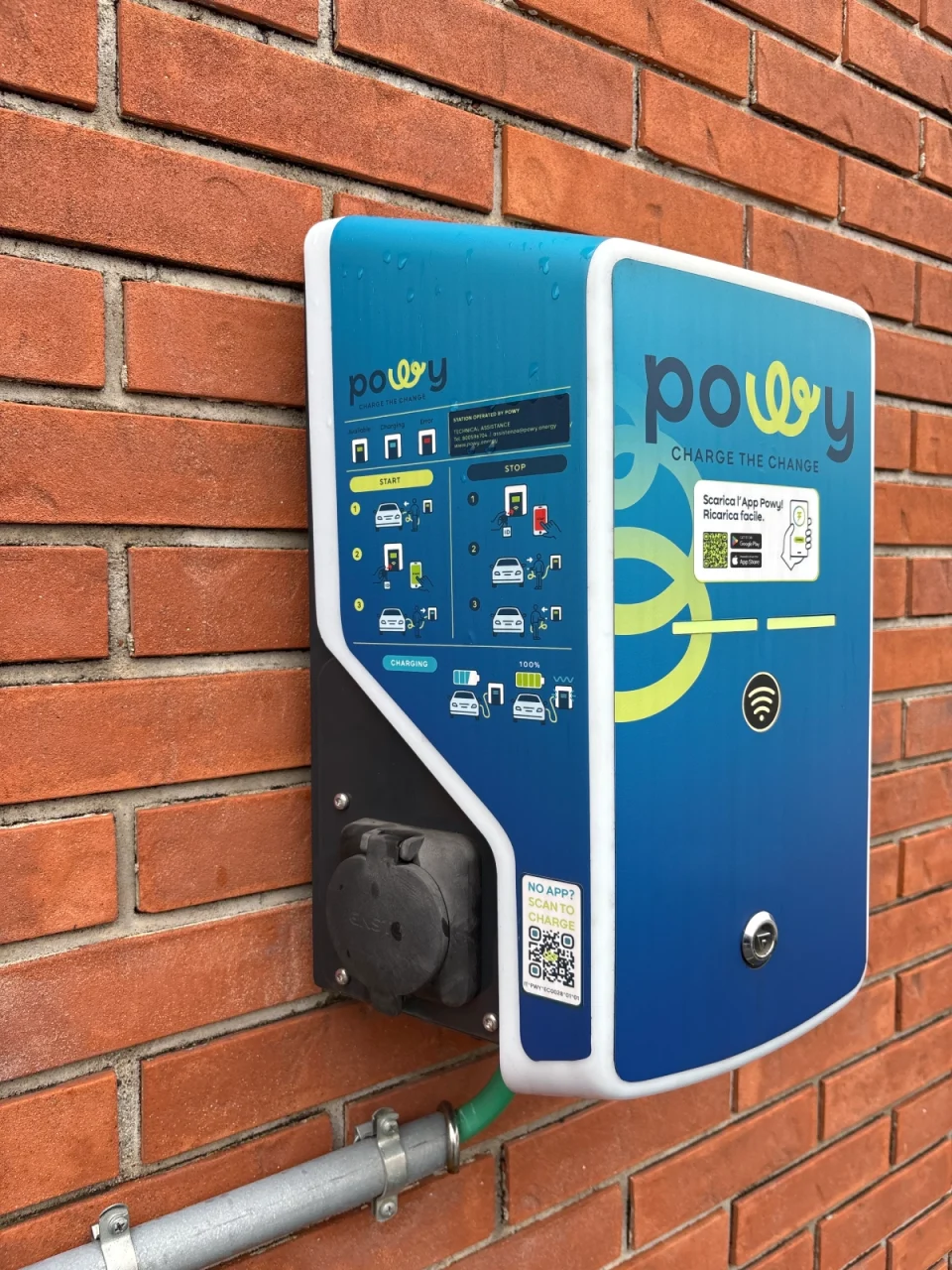


Have you ever found yourself standing in front of a charging station—maybe in a city you’re not familiar with—and had that moment of hesitation: “Now, how do I start it?” That’s exactly when the QR code becomes your best friend.
What at first glance appears to be just a small square of pixels is, in reality, one of the most effective tools for making electric mobility truly accessible. It’s not just about technology: it’s about ease of use—the ability to charge without having to download an app, create an account, or follow complicated steps.
Using the QR code is quick and easy and takes less than a minute. The process consists of four sequential steps:
In the world of public charging, the QR code serves as an immediate link between the physical world—the charging station—and the digital world—the payment process. That is why it has become a fundamental standard in the modern charging experience.
Powy, for example, supports this technology at its charging stations, combining it with other charging methods to offer maximum flexibility to every driver.
For operators, the goal remains the same: to eliminate all friction and make charging a natural, quick, and intuitive process.
As electric vehicle adoption grows, charging infrastructure has also become a potential target for digital fraud. There is increasing talk of “QRishing,” a phenomenon that combines QR codes and phishing.
The scheme is simple but insidious: a counterfeit QR code is placed over the original one and redirects users to a clone site, with the aim of stealing payment information.
That is why it is essential to pay attention to certain key signs:
Security measures should never create pressure: this is one of the most reliable signs of a fraudulent attempt.
Although QR codes are a universal and widely used solution, the charging ecosystem offers various options designed to accommodate different usage patterns.
QR codes remain an effective tool, especially when used wisely. Taking a few seconds to examine the code before scanning it is a good habit that enhances security and reduces the likelihood of unexpected issues.
If you notice any visual abnormalities, damaged QR codes, overlapping stickers, or signs of possible tampering, you should always stop the operation and report the issue to the operator to allow for a prompt investigation and help ensure the security of the infrastructure.
A simple step that makes the charging experience smoother, more reliable, and stress-free.
If the QR code does not work, you can start the charging session using the other standard methods, such as the app, a POS terminal, or an RFID device. Alternatively, you can almost always start the session using the charging station’s unique identification code via a dedicated web page. If you encounter further difficulties, we recommend contacting the operator’s customer support, which is available to assist you in starting the charging session.
Each provider sets its own pricing policies, but generally there is no specific surcharge for using the QR code. Rates are always transparent and are clearly displayed before the top-up begins, ensuring full awareness of the service cost.

Powy a company that owns, develops, and manages Italy's leading independent network of public charging infrastructure for electric vehicles.
Founded in Turin, Italy in 2018, Powy is at the center of the transition to more sustainable mobility, offering an innovative charging infrastructure that uses only 100 percent renewable energy.
Powy 's network includes quick, fast, and ultra-fast charging solutions strategically placed in public and private parking lots, supermarkets, shopping malls, and transportation hubs to ensure maximum convenience and accessibility for EV drivers. Each station is equipped with advanced technologies to provide a reliable and efficient charging experience.
Learn more: wpowy.energy