February 5, 2026
How to install a company wallbox: technical and regulatory requirements

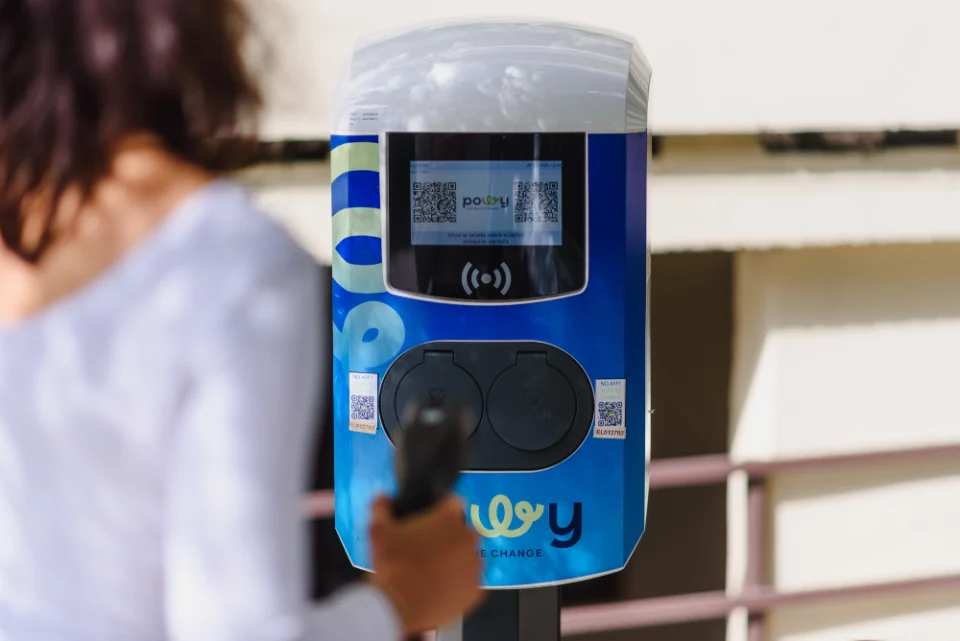


The installation of acompany wallboxhas become a priority for many businesses that want to offer charging services toemployees in the company car parkor managefleets of electric vehicles(company cars, commercial vehicles, company vehicles).
However, the process requires a thorough understanding oftechnical and regulatory requirementsto ensure a safe, compliant, and high-performance installation. In this comprehensive guide, we analyze every aspect to consider for companies with offices, operational sites, and reserved parking lots.
This guide is primarily intended forB2B companies with offices, employees, and company fleets, where access to charging is limited to a defined number of users (employees, collaborators, company vehicles, guests). These are contexts with:
If, on the other hand, you managehotels, shopping centers, restaurants, outlets, accommodation facilities, or parking lots open to the public, wallboxes can still be a valid solution, but withdifferent technical and management requirements:
For these businesses, the choice between wallboxes and public charging stations depends onthe number of usersand thebusiness model. A boutique hotel with 20 rooms may opt for wallboxes dedicated to guests, while a shopping center with hundreds of daily visitors may require DC infrastructure.
In this guide, we will focus on the needs of traditional B2B companies, but many technical and regulatory principles also apply to businesses with an external audience.
There are many reasons why a company should install charging points at its premises, ranging from benefits for people to operational optimization and strategic positioning.
From ahuman capital perspective, offering charging to employees has become anincreasingly sought-after benefitthat directly impacts satisfaction and retention. Employees can arrive at the office, connect their car, and leave at the end of the day with a full battery, completely eliminating the need to search for public charging stations in the evening or on weekends.
This benefit naturally extends tocustomers, partners, and business guests as well: offering charging during meetings or visits conveys an image of a modern company that is attentive to the needs of its stakeholders, strengthening professional relationships.
From anoperational and economic standpoint, for those who managecompany fleets(company cars, commercial vehicles, vehicles for agents or technicians), having charging points on site represents aconcrete competitive advantage.
Costs are drastically reduced compared to traditional fuels, vehicles are always ready for use, and there is no need to plan stops at public stations during the work shift, simplifying logistics and increasing productivity.
Finally, from astrategic and reputational standpoint, a well-designed charging infrastructure effectively communicates the company's commitment tosustainability and innovation, contributing to the achievement ofESG(Environmental, Social, Governance)objectives, which are increasingly central to the assessments of investors, corporate customers, and business partners.
It is no longer a "nice to have," but rather an element that distinguishes forward-thinking companies from the competition.
Before proceeding with installation, a preliminary assessment of the electrical system by a qualified technician is required. This step is crucial to verify the available power of the company's meter and determine whether it is sufficient to power one or more wallboxes without causing overloads.
Alternatively, you can consider installing a dedicated POD managed by the charging partner operator: in this case, a separate meter is installed, registered to the operator and dedicated exclusively to wallboxes, which manages energy supply and administrative aspects, providing the company with consumption reports.
The choice between an existing company POD or a dedicated POD depends on the contractual agreements and the service model chosen. If you opt for the existing company POD and the available power is insufficient, you will need to request an increase from the distributor.
The choice of wallbox depends on specific requirements:
It is essential to choosewallboxes that are certifiedaccording to European standards (CE mark) and equipped withintegrated protectionssuch as type A EV residual current devices (with DC current detection DC 6mA) and leakage current management systems.
Many modern wallboxes also includesmart features, such as Wi-Fi or 4G connectivity forremote monitoringandaccess management via RFID or apps, which are essential for controlling who charges and tracking consumption per employee or company vehicle.
In Italy, the installation of company wallboxes is regulated byLegislative Decree 257/2016andLegislative Decree 48/2020, which establish specific obligations:
For existing buildings that do not meet these requirements, there is no obligation, but the installation must still comply withspecific standards.
From a technical standpoint, the installation must comply with:
Installation must be carried out exclusively by acertified installer, who will issue thedeclaration of conformity (DiCo)required by law.
For systems with a power rating exceeding 6 kW,design by a qualified technician is also required. Operating without this certification exposes the company to significantlegal and insurance risks.
The installation process consists of several stages that requirespecialist skillsand must be followed to ensure safety and regulatory compliance:
1. Site inspection and technical design:a professional must assess the existing electrical system, calculate energy requirements, identify the optimal location for wallboxes considering the distribution of electrical loads, and design the intervention in compliance with regulations.
2. Handling paperwork:if necessary, communications with the municipality, requests for authorization from the network operator for the power increase, and coordination with the energy supplier must be handled. This phase can be complex and slow down the project if not managed correctly.
3. Certified physical installation:the installer mounts the wallboxes, makes the electrical connections with the necessary protections, installs any additional electrical panels, and checks the grounding. Any error at this stage can compromise the safety of the entire system.
4. Testing and certification:all electrical parameters and device safety are checked, andcomplete compliance documentation(DiCo) is issued, which is essential for any inspections or insurance coverage.
5. Smart system configuration:for smart wallboxes, it is necessary to configure connectivity, management apps,controlled access systems(RFID, codes, etc.) and consumption reporting, operations that require specific IT skills.
For companies that needmultiple installations, the complexity increases exponentially.Dynamic load management systemsintelligently distribute the available power among all active wallboxes, preventing overloads. These systems require careful design, programming of balancing parameters, and integration with the existing electrical infrastructure.
The configuration can includedifferentiated priorities(for example, prioritizing company fleets over employees to ensure vehicle operability), time slot booking systems,consumption tracking by cost center, and detailed reporting for internal accounting or employee reimbursements. Each element requires specific skills to function properly.
The costs for installing a company wallbox vary greatly and depend on: the type of wallbox, the number of charging points, the condition of the existing electrical system, the need for civil works, and the chosen contract model. The investment consists of several items.The hardwareranges from a few hundred euros for basic models to several thousand for professional smart solutions.
Certified installationincludes specialized labor, electrical materials, protective devices, and a declaration of conformity.Infrastructure upgrades(electrical panel upgrades, civil works, power increases) are often the most unpredictable item.Load management systemsfor multiple installations require additional investment but optimize available power.
The company can choose to purchase the hardware independently and manage all stages of installation, or rely on a specialized charging partner that offers complete packages or different partnership options.
Powy, for example, offers three formulas to meet different business needs:
Direct purchase: turnkey solution with full ownership of the infrastructure. Powy from hardware selection to certified installation, ensuring management, ongoing maintenance, and intelligent software for optimization. Includes the possibility of generating revenue by opening public access.
Zero-investment partnership: Powy all hardware, installation, and start-up costs. The company receives complete management with no operating expenses and aguaranteed revenue streamwith a percentage of each charging session. Scalable model for long-term growth.
Shared co-investment: joint investment withtransparent, contractually definedparticipation percentages. Equal sharing of risks and benefits, Powy management Powy , andrevenue streambased on a percentage of charging sessions.
The choice depends on your priorities: the autonomous approach offers maximum flexibility but requires internal expertise, turnkey purchase guarantees comprehensive support while maintaining ownership, partnership eliminates initial risk, and co-investment balances financial participation and economic results.
After installation, the infrastructure requiresperiodic scheduled maintenanceto ensure safety and efficiency over time. Checks must verify the status of electrical connections, the functioning of protections, the integrity of cables, andfirmware updatesfor smart wallboxes.
Without a maintenance contract with specialized operators, any malfunctions can causelong periods of downtime, creating disruption for employees and fleets.
Remote 24-hour monitoringallows anomalies to be identified before they become critical failures, but requires dedicated platforms and qualified technical assistance ready to intervene.
Would you like to install a company wallbox with the guarantee of a comprehensive and professional service?Powy aturnkey servicethat manages every stage of the project: from technical inspection to design, from certified installation with the issue of all necessary documentation, to scheduled maintenance and 24/7 assistance.
You won't have to deal with paperwork, authorizations, or coordination between different suppliers: you will havea single point of contactfor your corporate charging infrastructure.Contact us for a personalized quote by clicking below.
In most cases, no municipal permit is required if the installation takes place on private company property and does not involve structural changes visible from the outside. You may need to notify the utility provider if you request an increase in your meter’s capacity. In specific situations (such as buildings subject to preservation orders or areas governed by specific regulations), it is advisable to check with your local municipality.
Yes, it is possible to install multi-point systems with dynamic load management. These systems intelligently distribute the available power among all active wallboxes, preventing overloading of the company’s electrical grid. It is the ideal solution for companies with electric vehicle fleets or many employees who need to charge their vehicles.
If the available power is insufficient, there are two options: request a power increase from the energy supplier (a process that takes 2–4 weeks) or install a dynamic load management system that automatically balances power between company appliances and wallboxes, making the most of the existing power without the need for increases. Alternatively, you can consider from the outset installing a dedicated POD managed by the partner charging operator, which allows you to completely separate wallbox consumption from company consumption.

Powy a company that owns, develops, and manages Italy's leading independent network of public charging infrastructure for electric vehicles.
Founded in Turin in 2018, Powy is at the forefront of the transition to more sustainable mobility, offering an innovative charging infrastructure that uses only renewable energy.
Powy 's network includes quick, fast, and ultra-fast charging solutions strategically placed in public and private parking lots, supermarkets, shopping malls, and transportation hubs to ensure maximum convenience and accessibility for EV drivers. Each station is equipped with advanced technologies to provide a reliable and efficient charging experience.
Press Office: press@powy.energy