Published on
Ultrafast charging stations: when it makes sense to invest in charging speed

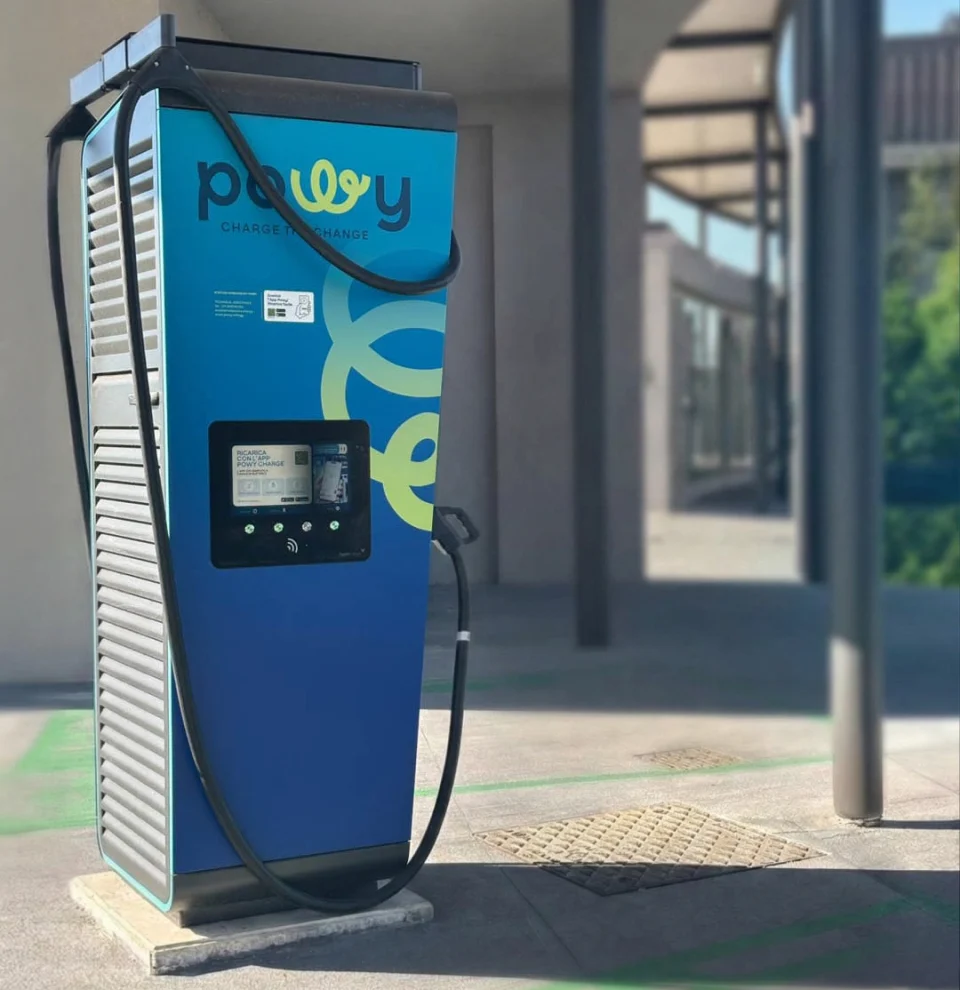


In the electric vehicle sector,charging speedis often touted as the most important factor to invest in: the faster, the better. But is that really always the case? The answer is no.
Anultrafast station, in the wrong context, risks becoming a costly and underutilized investment. In the right context, however, it can prove to be the most effective choice for both those installing the infrastructure and for users. In this guide, we explain what ultrafast stations are, where they work best, and how to approach this type of investment wisely.
Charging stations are considered "ultrafast" when theiroutput power exceeds 150 kW; the most advanced models available today reach350 kW.
UnlikeAC stations, which are typically installed in company or apartment complex parking lots, ultrafast stations deliverdirect current (DC)that is transferred directly to the vehicle’s battery, bypassing the onboard converter. This enables significantly faster charging speeds: while a 22 kW wallbox takes several hours for a full charge, a 150 kW station can charge the batteryto 80% in about 20–30 minutes, depending on the vehicle.
The standard connector for DC charging in Europe is theCCS Combo 2, which has been made mandatory for all new public charging infrastructure underthe European AFIR regulation.
The most advanced stations use adynamic power-sharing architecture: a central module intelligently distributes the available power among the active charging points. If only one vehicle is connected, it receives all the available power; if multiple vehicles are connected simultaneously, the system optimally allocates the power, ensuring short charging times for all users.
Ultrafast charging isn't a one-size-fits-all solution: it works well in areas withhigh vehicle turnover,short stops, andconsistent demandthroughout the day. The most suitable settings are:
It is equally important to recognize when this investmentis unnecessary. Anyone who parks for 7–8 hours at the office, overnight at a hotel, or in a residential parking lot does not need an ultra-fast charging station: in these cases,an11–22 kW wallboxis more than enough to fully charge the vehicle while parked, with much lower installation and operating costs.
Ultrafast infrastructure requiresmore powerful network connections,more complex electrical systems, andsignificantly higher upfront investments. If the average dwell time is long, much of this capacity remains unused, making the investment economically inefficient.
In situations where vehicles remain connected for many hours, the goal is not to charge them as quickly as possible, butto distribute the energy over the course of the stop. Slower charging also makes it possible to optimize grid management, reduce power spikes, and facilitate integration with self-generation systems such assolar power.
There is therefore only one key question to ask during the design phase:how long do vehicles remain parked?If the answer is several hours, the most efficient solution is almost always AC or semi-fast AC charging. If, on the other hand, parking durations are short and there is high turnover,ultra-fast chargingis the best choice.
Installing an ultrafast charging station is asignificant infrastructure investment that goes far beyond simply purchasing the hardware. In addition to the equipment, adedicated medium-voltage electrical connection is required, which in most cases necessitates the construction of atransformer substation. The scope of the project varies significantly depending on the site, the distance from the existing grid, and the power requirements.
Generally speaking, these investments range fromtens to hundreds of thousands of euros, depending on the power output and the number of units installed. In addition to this, there arerecurring operating costs: maintenance, connectivity, management software, and electricity. For those undertaking this project on their own, a thorough technical and financial assessment is essential before proceeding.
Managing an ultrafast charging investment on your own is possible, but it involves significant costs: coordinating suppliers, electrical design, obtaining permits, ongoing maintenance, software updates, and user support. These are tasks that requirespecific expertise and dedicated resources—areas that often lie outside the core business of those who simply want to offer a charging service.
Rely on a specialized service provider such as Powy allows you to recoup your investment more quickly and efficiently, reducing risks and management complexity. Powy three collaboration options:
The industry is evolving rapidly. ThePlug&Chargeprotocol(ISO 15118)enables automatic authentication and payment simply by plugging in the cable—for vehicles and stations compatible with the standard—thereby improving the user experience and increasing station utilization rates.
Battery energy storage systems (BESS) allow energy to be stored during off-peak hours—from the grid or from solar panels—and released during peak hours, thereby reducing overall energy costs. Finally,bidirectional charging (V2G)is opening up new revenue opportunities: operators are beginning to be able to feed energy back into the grid during peak hours, transforming the infrastructure into an active asset.
Are you considering installing an ultrafast charging station?Powy can helpPowy make the right choice for your specific situation: from a free technical assessment to infrastructure design and 24/7 operational management. Contact us to find out which partnership model best suits your project.
No. Charging speed depends primarily on the vehicle and the maximum power it can handle. If a car has a maximum charging power of 100 kW, it will receive a maximum of 100 kW even when connected to a 350 kW station. High-power stations, however, ensure that they do not act as a bottleneck and allow compatible vehicles to charge at the fastest possible speed.

Powy a company that owns, develops, and manages Italy's leading independent network of public charging infrastructure for electric vehicles.
Founded in Turin in 2018, Powy is at the forefront of the transition to more sustainable mobility, offering an innovative charging infrastructure that uses only renewable energy.
Powy 's network includes quick, fast, and ultra-fast charging solutions strategically placed in public and private parking lots, supermarkets, shopping malls, and transportation hubs to ensure maximum convenience and accessibility for EV drivers. Each station is equipped with advanced technologies to provide a reliable and efficient charging experience.
Press Office: press@powy.energy