


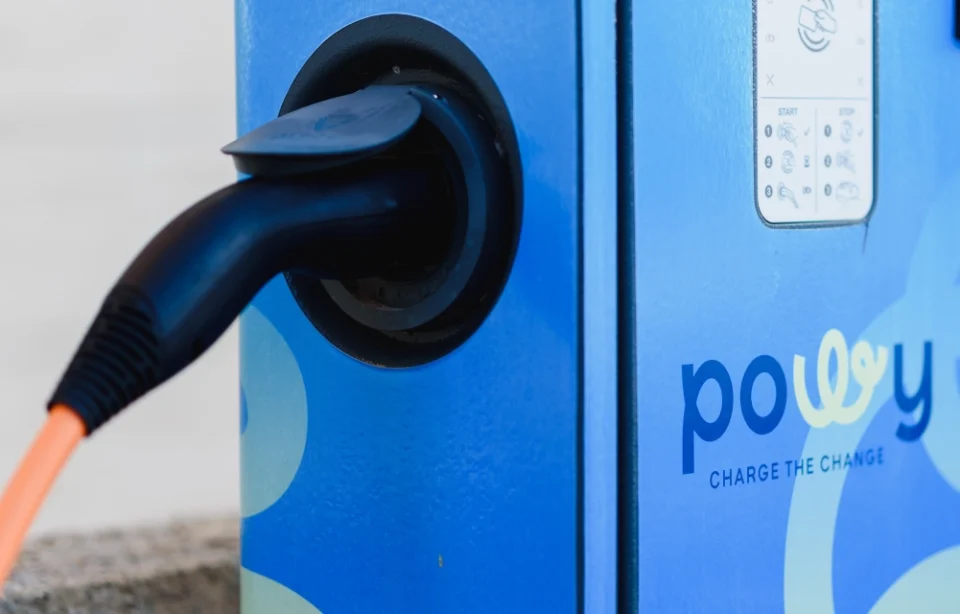
In the world of electric mobility, terms such as"charging point"and"charging station"are often used interchangeably, causing confusion. In reality, there areprecise differencesbetween these two concepts, which are important to understand in order to navigate the charging infrastructure correctly, plan trips, and make informed choices for your business or home.
The hierarchy of charging infrastructure
To understand the distinction, it is useful to think of a hierarchy: thecharging pointis the basic unit, while thecharging stationis the container that can house one or more of them. It is like the difference between a single gas pump (the point) and the entire gas station (the station).
Acharging pointis a single socket or connector through which an electric vehicle can charge its battery. Technically, it is identified by a cable with aspecific connector(Type 2, CCS, CHAdeMO, etc.) that connects to the vehicle's charging port. A point servesonly one vehicle at a timeand can be installed in very different contexts: a home wallbox is a charging point, as is a single cable at a public charging station or a company parking space equipped with charging. Power can vary dramatically, from3.7 kWfor slow home charging to350 kWfor ultra-fast HPC (High Power Charging) highway systems.
Acharging station, on the other hand, is the complete physical infrastructure that can containone or more charging points. It can be a single hardware with two cables (i.e., two points) or an entire service area with dozens of hardware, each equipped with one or more points. Stations are distinguished by thenumber of points available, thetype(private in apartment buildings/companies or public with free access), thetotalinstalledpower, and theadditional servicesoffered, such as Wi-Fi, rest areas, toilets, or refreshment points, especially along highways.
Why this distinction is important in practice
This difference becomes crucial when planning a trip or looking for a charging station. If a navigation app indicates"1 station with 4 charging points," it means that there are 4 cables available at that location to charge 4 vehicles simultaneously. If, on the other hand, you see"1 charging point available," only one vehicle can be charged at a time.
This distinction becomescritical during peak hours, weekends, or holiday periods, when demand for charging is highest and finding a free spot can mean the difference between continuing your journey or waiting. Forcompanies designing internal infrastructure, understanding this hierarchy is key to correctly sizing the investment: how many points do you need for your fleet? A station withdynamic load managementcan accommodate more points by intelligently sharing available power, optimizing costs, and avoiding overloads.
Classification by power and charging times
Stations are classified according to thepower output, which directly determines charging times and therefore optimal use. Each category meets specific needs:
Slow charging – up to 7.4 kW:suitable for extended periods of time, such as overnight stops at home or during the entire working day at the office. Requires 6-8 hours for a full charge. Usesalternating current (AC)and Type 1 or Type 2 connectors.
Quick charging – up to 22 kW:ideal for public parking lots, hotels, and businesses where vehicles are parked for 2-4 hours. Allows you to charge 80% of the battery in half a day. Operates onalternating current (AC)with Type 2 connectors.
Fast charging – up to 100 kW:suitable for short stops of 20-30 minutes, typical of highway service areas or high-traffic urban centers. Usesdirect current (DC)with CCS or CHAdeMO connectors.
Super-fast charging – up to 150 kW:allows even faster charging, ideal for long journeys with 15-20 minute coffee breaks. Operates on high-powerdirect current (DC).
Ultra-fast charging – over 150 kW:the most advanced technology, available at major highway hubs. It allows you to add 200-300 km of range in just 10-15 minutes. It usesdirect current (DC)with power ratings of up to 350 kW.
Each location, with its own requirements and characteristics, is suited to a specific type of charging infrastructure in order to maintainadequate safety and efficiency standards. Some stations may also offer acombination ofslow, fast, and ultra-fast chargingoptionsto meet the different needs of users, supplying both alternating current (AC) and direct current (DC) power.
How to find and plan charging
There are several complementary solutions for locating points and stations.Charging apps(such as Powy ) show stations with detailed information onreal-time availability, power, prices, and connector types. Manymodern electric carsintegrate maps with updated stations directly into the navigation system, automatically suggesting the best stops along the route and calculating the necessary charging times.
When planning a trip or designing your company's infrastructure, always consideractual availability(some spots may be occupied or out of service), thepower offeredto calculate real times, and, for company installations, the possibility ofreserving spots for priority fleetsor implementing reservation systems for employees that guarantee access without waiting.
Are you looking for reliable charging points for your business trips or considering installing a charging station at your premises? Powy an ever-expanding network of charging stations in Italy and Europe, based on advanced technologies such as dynamic load management, multiple payment systems, and 24/7 remote monitoring.
For businesses, we offer complete turnkey solutions for the installation of charging stations in all types of parking lots, with different contract options designed to cover every phase of the project: from the initial site inspection to design, installation, management, and scheduled maintenance. Discover our network and contact us for a tailor-made solution!
FAQ: Frequently asked questions about charging stations
How many charging points can a station have?
A charging station can have anywhere from 1 to several dozen charging points, depending on its size and type. A small urban station may have 2–4 points, while large stations along highways can have 20–30 points or more. Each point can serve only one vehicle at a time.
Can I use any charging station with my electric car?
It depends on the type of connector your vehicle has. In Europe, most electric cars use the Type 2 connector for slow/fast charging and CCS (Combined Charging System) for fast charging. Some older Asian models use CHAdeMO. Always check the connector compatibility before heading to a charging station.
How do I know if a charging station is available?
Navigation apps for electric vehicles display the status of charging stations in real time: available, occupied, or out of service. Many stations also allow you to reserve a charging spot in advance via the app, ensuring it’s available when you arrive—which is especially useful on long trips.
What happens if all the spots at a station are taken?
If you find that all charging stations are occupied, you can wait nearby while checking the status via the app, or look for the nearest alternative station. Many apps display estimated charging times reported by other users. When traveling on highways, it’s a good idea to plan alternative stops and check availability before you arrive, especially during peak traffic times.
About Powy

Powy a company that owns, develops, and manages Italy's leading independent network of public charging infrastructure for electric vehicles.
Founded in Turin in 2018, Powy is at the forefront of the transition to more sustainable mobility, offering an innovative charging infrastructure that uses only renewable energy.
Powy 's network includes quick, fast, and ultra-fast charging solutions strategically placed in public and private parking lots, supermarkets, shopping malls, and transportation hubs to ensure maximum convenience and accessibility for EV drivers. Each station is equipped with advanced technologies to provide a reliable and efficient charging experience.
Press Office: press@powy.energy