June 11, 2026
Electric cars in the summer: how to best manage charging in hot weather

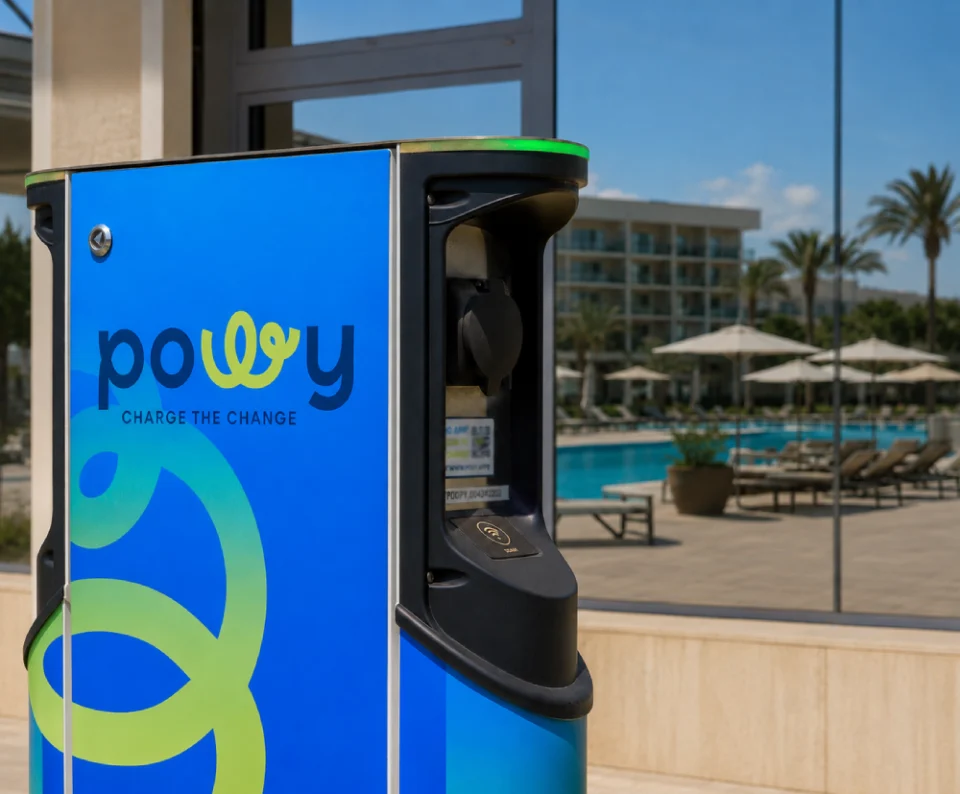


With the arrival of summer, planning a vacation—or even just a weekend getaway—is once again at the forefront of our minds. More and more travelers are choosing to travel sustainably by driving electric cars. There is one factor, however, that is often overlooked: the impact of high temperatures on charging times.
While it’s well known that winter cold temporarily reduces range, the sweltering summer presents a different and lesser-known challenge: thermal management during charging, especially fast charging. Understanding how the vehicle reacts to heat is the first step toward planning smart, stress-free stops.
Lithium-ion batteries generally operate more efficiently at moderate temperatures, around 20–25°C, while extreme heat can reduce charging efficiency. During DC fast charging, the high energy flow inevitably causes the battery’s internal temperature to rise.
When you factor in ambient temperatures of 35–40°C and the heat absorbed by the asphalt after hours of driving, the battery can overheat even further. In such cases, the management system intervenes by reducing the charging power to protect the battery.
The role of the BMS: This is where the Battery Management System(BMS)—the vehicle’s electronic brain—comes into play. To protect the cells, the BMS can automatically reduce the charging power when the battery temperature rises too high. That’s why, even when connected to an ultra-fast charging station, the car may charge more slowly than expected, especially in high heat, when the battery is already warm, or during consecutive high-power charging sessions.
To save time and avoid long waits in the sun, just follow these tips:
The choice of charging method has a significant impact on the vehicle's thermal management:
| Charging method | Power | Impact and ideal use |
| AC (Alternating Current) Charging | 7–22 kW | It generates minimal heat and does not put a strain on the BMS. It is the perfect solution for extended stops (overnight parking, at the beach, in shopping centers) and allows you to reach 100% battery capacity without straining the components. |
| DC (Direct Current) Charging | 50–200+ kW | This places a heavy load on the cooling system. It should be used strategically for highway driving and for quick top-offs (10–80%). In the summer, peak power levels may be maintained for shorter periods than during the colder months. |
In the summer, even the location of the charging station can make a difference. The Powy network offers a comprehensive range of solutions designed to meet every travel need:
All stations in the Powy network provide renewable energy and are equipped with state-of-the-art technology to ensure a seamless and safe charging experience.
Traveling in electric mode during the summer months just requires a little extra planning. Withthe Powy app, it takes just a few taps to locate charging points—whether part of the Powy network Powy interoperable networks—along your route, check connector availability in real time, and filter stations based on your desired charging power.
Whether it’s a super-fast DC top-up DC your lunch break or an AC charge AC your hotel for the night, you’ll always find the solution that’s right for you.
Understanding how your car performs and planning your stops using a reliable charging network allows you to optimize your charging times and travel without any unexpected issues. At Powy , we Powy every day to make electric mobility increasingly accessible, efficient, and sustainable.
Electric cars can be used comfortably in all seasons. Modern electric cars have increasingly longer ranges (often over 400 km on a single charge), and the charging network in Europe is expanding rapidly. In summer, heat can increase charging times by 10–20% due to battery thermal management, and heavy use of air conditioning can reduce range by 15–25%. With careful route planning and the help of dedicated apps, you can easily locate charging stations along the way and travel with complete peace of mind. Additionally, many tourist facilities offer on-site charging, making every stop an opportunity to charge your car.

Powy a company that owns, develops, and manages Italy's leading independent network of public charging infrastructure for electric vehicles.
Founded in Turin in 2018, Powy is at the forefront of the transition to more sustainable mobility, offering an innovative charging infrastructure that uses only renewable energy.
Powy 's network includes quick, fast, and ultra-fast charging solutions strategically placed in public and private parking lots, supermarkets, shopping malls, and transportation hubs to ensure maximum convenience and accessibility for EV drivers. Each station is equipped with advanced technologies to provide a reliable and efficient charging experience.
Press Office: press@powy.energy