July 17, 2026
RFID Technology for Electric Vehicle Charging: What It Is and How It Works in Detail

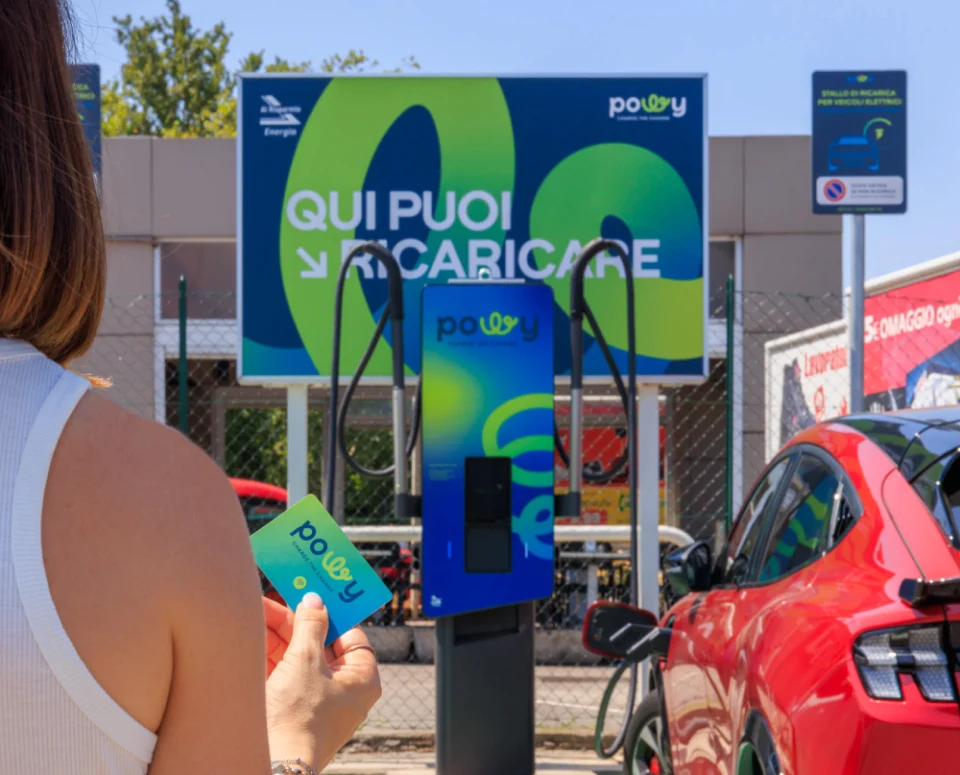


Charging an electric car has become an increasingly simple and straightforward process. Today, drivers can choose from a variety of ways to start a charging session: from dedicated apps to direct payment systems built into the charging stations, all the way to RFID devices.
RFID (Radio-Frequency Identification) technology allows users to authenticate themselves at a charging station with a simple gesture. It can be integrated into various devices, such as cards, keychains, or other compact devices, allowing users to start charging without necessarily using their smartphone.
But how does an RFID system work, and why does it continue to be an important technology in the electric vehicle charging experience?
RFID (Radio-Frequency Identification) is a wireless technology that allows an object to be identified through the exchange of information between a microchip and a reader via radio waves.
This technology has been part of our daily lives for years now: it is used, for example, in electronic cards for accessing hotel rooms, in company ID badges for entering offices and restricted areas, and in contactless payment systems using cards and digital devices.
In the electric mobility sector, RFID is used to identify the user and authorize the start of a charging session via a device linked to the user’s account, such as a card, a keychain, or other compatible devices.
The system is based primarily on two components: the RFID tag—that is, the microchip containing the device’s identifier—and the RFID reader, which is installed at the charging station.
The tag is a passive device: it does not require an internal battery, but is activated when it enters the electromagnetic field generated by the reader. Once recognized, it transmits its identification code, which is verified by the operator’s management system.
The reader on the charging station communicates with the tag, collects the necessary information, and sends it to the digital platform to authorize the session.
Using an RFID device is very simple. The sequence of steps may vary depending on the charging station model: in some cases, you simply need to connect the vehicle first and then hold the RFID tag near the reader to authorize the start of the charging session, while in others, you must “tap” the RFID reader before connecting the vehicle and starting the charging process.
In just a few moments, the system recognizes the code associated with the device and verifies the information linked to the user's account. If authentication is successful, the charging station enables the flow of power and charging can begin.
Behind such an instantaneous action lies a fully digital process: the station communicates with the operator’s backend, which verifies the device’s validity and authorizes the session.
To complete the charging process, simply hold the same RFID device up to the reader again. The charging station will recognize the user, stop supplying power, and unlock the connector, allowing you to safely disconnect the cable from the vehicle.
It is this combination of speed and ease of use that makes RFID a solution particularly popular among users who top up frequently.
Smartphone apps play a central role in electric mobility: they let you find available charging stations, monitor your charging progress, and manage your account.
However, an RFID device can offer some practical advantages in certain situations.
The first issue concerns connectivity. In underground parking garages, hotel garages, or areas with limited mobile coverage, a smartphone may have trouble connecting to the network. With RFID, however, you can authenticate yourself directly through the payment terminal.
Another advantage is how quickly it can be used. With a simple “tap” on the reader, you can start charging without having to open an app or go through several steps on your phone.
Finally, an RFID reader is a solution that is always available, even when the smartphone is out of battery or cannot be used.
The RFID technology used in electric vehicle charging systems is designed to ensurereliable user identification.
The RFID device does not directly contain personal information or payment data, but only a unique identifier associated with the customer profile registered on the platform of the operator that issued it.
Charging authorization is granted through communication between the charging station and the management system, which verifies the validity of the request before allowing energy to be supplied.
If you lose your RFID device, you can quickly deactivate it through the app or the operator’s platform, thereby preventing unauthorized use.
With the Powy RFID Card Powy charging is simple and instant: just hold the card near a compatible station to authenticate and start the session.
The Powy RFID Card Powy be used across the entire Powy station network Powy at charging stations operated by interoperable providers, offering users an additional way to manage their charging.
A solution designed to complement the charging experience offered by the Powy app, providing a convenient alternative even in situations where a smartphone isn't available or connectivity is limited.
From daily charging to longer trips, all the way to managing company vehicles, RFID technology is a useful tool for simplifying access to electric mobility.
Learn more about the Powy app and the Powy RFID Card.
RFID stands for Radio-Frequency Identification and is a technology that allows a device to be identified through the exchange of information via radio waves between an RFID tag and a compatible reader.
No. RFID can be integrated into various items, including cards, keychains, or other compact devices. In the electric vehicle charging sector, it is used to allow users to authenticate themselves at a charging station and start a charging session.
The app lets you manage various functions in addition to charging, such as finding an available charging station, monitoring your current charging session, and viewing your charging history. An RFID device, on the other hand, offers an even more seamless experience: all it takes is a simple tap on the charging station to authenticate yourself and start charging, without having to use your smartphone.
It depends on the compatibility of the charging stations and the roaming agreements between operators. An RFID device can be used at infrastructure sites that support the service and are part of the network of the operator that issued it.
Yes. An RFID device can be a practical solution for managing company vehicles, because it allows drivers to quickly identify themselves and use the charging service without having to set up a session via their smartphone every time.

Powy a company that owns, develops, and manages Italy's leading independent network of public charging infrastructure for electric vehicles.
Founded in Turin in 2018, Powy is at the forefront of the transition to more sustainable mobility, offering an innovative charging infrastructure that uses only renewable energy.
Powy 's network includes quick, fast, and ultra-fast charging solutions strategically placed in public and private parking lots, supermarkets, shopping malls, and transportation hubs to ensure maximum convenience and accessibility for EV drivers. Each station is equipped with advanced technologies to provide a reliable and efficient charging experience.
Press Office: press@powy.energy