


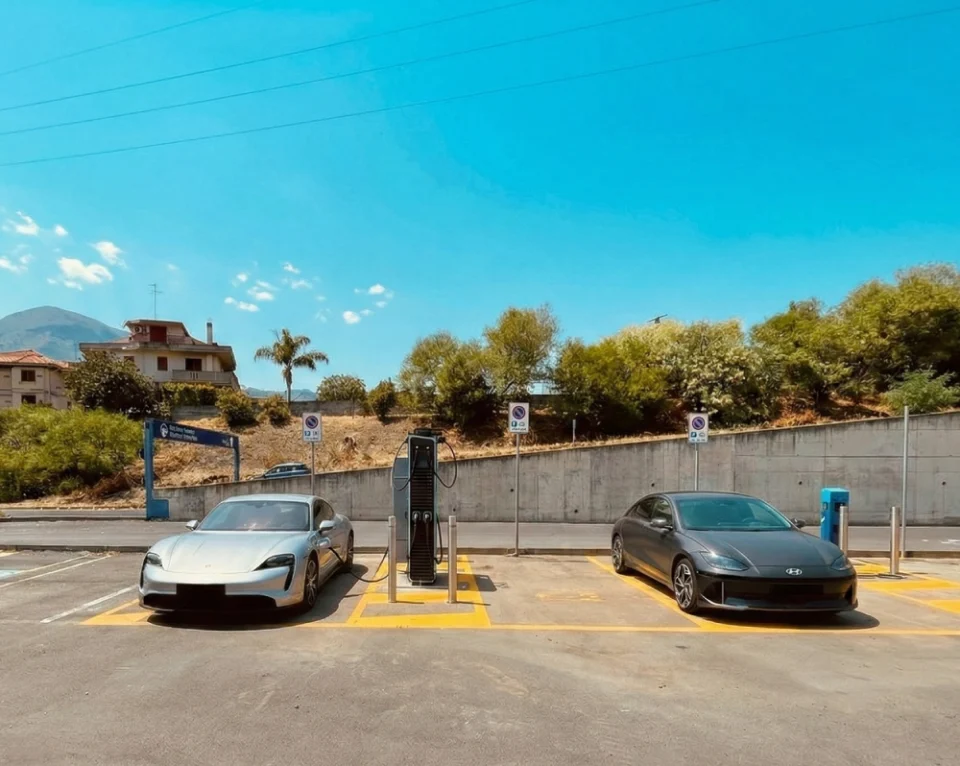
Charging speedhas become one of the decisive criteria when choosing an electric car. By2026, technology has made extraordinary progress: the best models on the market are capable of recoveringover 300 km of range in less than 20 minutes, making long journeys in electric cars increasingly convenient and competitive compared to traditional vehicles.
Ultra-fast chargingis no longer exclusive to niche supercars, but is becoming increasingly accessible to mid-range models and family SUVs. Choosing a car withfaster chargingmeans saving time when traveling, reducing range anxiety, and making the most of the growing network ofultra-fast charging stationsin Italy and Europe.
In this comprehensive guide, we analyze the10 modelsthat offer the best charging performance in 2026, with technical data, approximate times, and practical advice.
How to measure charging speed: the fundamental parameters
Before looking at the rankings, it is essential to understand the parameters used to evaluate the charging speed of an electric vehicle. It is not enough to look only at the maximum power declared by the manufacturer: there are several indicators to consider in order to get a complete and realistic picture.
- Maximum charging power (kW):the maximum power accepted by the car from a fast charging station. The higher it is, the faster the theoretical charging speed.
- Time 10-80%:the most useful parameter for travelers. It indicates the minutes needed to go from10% to 80%charge, considered the ideal range to maximize speed while avoiding slowing down the charging curve.
- Electrical architecture (400V vs 800V):vehicles with800V architecturecan handle much higher power than400V systems, drastically reducing charging times.
- Kilometers recovered in 10 minutes:a practical and immediately understandable indicator of how much range you gain during a short stop.
- Charging curve:Some vehicles maintain high power levels for long periods of time (flat curve), while others only reach their peak for a few moments. A flat curve is much more advantageous in practice.
It is important to remember that optimal values are achieved with abattery pre-conditionedto the ideal temperature, with a compatible charging station, and in the early stages of charging. In everyday use, times may vary depending on the outside temperature, battery condition, and power availability of the charging station.
1. Xpeng G9 (2026): the European record for ultra-fast charging
TheXpeng G9is the electric SUV that set theEuropean record for charging speedat a public charging station in 2026. With a peak power of 453 kW and 800V architecture, the model can charge from10% to 80% in about 13 minuteswith its93.1 kWh battery. Its WLTP range exceeds 520 km, offering a solid balance between capacity and charging speed.
The Xpeng brand is expanding its presence in Europe and Italy, with a growing service and charging network. Thebattery pre-conditioningtechnology integrated into the navigation system allows you to arrive at the charging station at the optimal temperature, maximizing charging performance from the moment you plug in.
2. Porsche Taycan (2026): German engineering excellence
ThePorsche Taycanremains one of the absolute benchmarks for charging quality among premium vehicles. With apeak power output of 320 kWand800V architecture, it can recover approximately 100 km of range in 5 minutes under ideal conditions. The approximate time to go from10% to 80%with the93.4 kWhbattery is around18 minutes.
The Taycan's strength lies not only in its peak power, but also in its extraordinaryflat charging curve: the vehicle maintains power levels close to maximum for most of the process, rather than dropping rapidly as is the case with many competitors. This means that the actual charging time is consistently close to the theoretical time, with no unpleasant surprises while traveling.
3. Hyundai Ioniq 6: the record-breaking Korean sedan
TheHyundai Ioniq 6, an aerodynamic sedan with a drag coefficient of just 0.21, represents one of the best combinations of range and charging efficiency. With a maximum power output of 230 kW and 800V architecture (E-GMP platform), it can go from10% to 80% in about 18 minuteswith its77.4 kWh battery. TheRWD Long Rangeversion has a range ofover 610 km WLTP.
A key feature is theautomatic battery pre-conditioning system: when a fast charging station is entered as a destination in the integrated navigation system, the car automatically adjusts the battery temperature before arrival, ensuring that maximum power is always available from the moment it is connected.
4. Kia EV6 GT (2026): power and sportiness
TheKia EV6 GTshares the E-GMP platform with the Ioniq 6 and offers upgraded charging performance, with amaximum power of 800V and 240 kW. The estimated time for10-80%charging is around18-20 minutes. With 650 hp and 0-62 mph acceleration in around 3.5 seconds, it is one of the few vehicles on the market to combine high sports performance with fast charging and a range of280 miles WLTP.
The 2026 version includes aheat pump as standard, which significantly reduces winter consumption and improves real autonomy in cold seasons, one of the aspects most appreciated by European users.
5. Tesla Model 3 Highland: speed and ease of charging
TheTesla Model 3 Highlandcan charge up to 250 kW on compatible fast charging stations. The time to go from 10% to 80% (Long Range battery of approximately 75 kWh) is about15-20 minutesunder optimal conditions. In 15 minutes of charging, you can recover approximately230-260 kmof WLTP range.
The integrated navigation system automatically calculates the optimal charging stops andpre-conditions the batterybefore arriving at the charging station, ensuring maximum power is available from the moment it is connected.
6. BMW iX xDrive50: Bavarian technology at its best
TheBMW iX xDrive50is the benchmark electric SUV in the German premium segment. With a declared charging power of 195 kW and a net battery capacity of 111.5 kWh, it takes around35 minutes to charge from10% to 80%.Ten minutesof charging provides approximately90-100 kmof WLTP range. The declared range exceeds630 km WLTP.
The BMW energy management system is particularly sophisticated: the car canpre-condition the batteryeven when it is a long way from the charging station, ensuring consistent performance.Over-the-airconnectivity allows for continuous updates that optimize battery management over time.
7. Mercedes EQS 450+: record range and efficient charging
TheMercedes EQS 450+sets the benchmark in the luxury electric sedan segment. With a claimed charging power of 200 kW and a 107.8 kWh battery, it takes around31 minutes to charge from10% to 80%.The large battery capacity ensures a WLTP rangeof over 780 kmin the most efficient version, making stops during travel a rare necessity.
TheMercedes me Chargesystem integrates hundreds of thousands of charging points across Europe, with a single RFID card providing access to multiple networks.MBUXnavigation automatically calculates the most efficient stops, taking into account traffic, weather, and actual battery conditions.
8. Audi Q6 e-tron: the SUV with PPE architecture
The Audi Q6 e-tronis one of the Volkswagen Group's latest and most technologically advanced models. With a claimed charging power of 270 kW and 800V architecture developed on the PPE platform shared with Porsche, it can go from 10% to 80% in around 21 minutes with its 83 kWh net battery. The declared WLTP range exceeds625 kmin the most efficient version.
An innovative feature of the Q6 e-tron is its compatibility withbidirectional charging, which allows the car's battery to be used to power external devices or, with the appropriate hardware, contribute to domestic self-consumption. This feature, combined with its charging efficiency, makes it anall-round energy asset.
9. Genesis GV60: Korean luxury with E-GMP
TheGenesis GV60is based on the Hyundai-Kia Group's E-GMP platform and offers800V charging power up to 230 kW. The estimated time for10-80%(77.4 kWh battery) is approximately16-17 minutes. The luxurious interior design, quality materials, and driving comfort make it a viable alternative to established European brands in the compact premium segment.
Distinctive technologies includeFace Connect, a facial recognition system for keyless access and vehicle start-up, andFingerprint Authenticationfor direct payment from the center console, without additional apps or cards.
10. Polestar 3: Swedish sustainability and speed
ThePolestar 3MY2026, the Swedish brand's premium SUV, has received a significant upgrade: with the switchto 800V architecture,charging power reaches 350 kWin the Dual Motor version and 310 kW in the Rear Motor version. The time to go from10% to 80%drops to about22 minutes, with a 106 kWh (Dual Motor) or 92 kWh (Rear Motor) battery.
Polestar has placedtransparency on sustainabilityat the heart of its brand: the company publishes anenvironmental impact documentfor each model that tracks the carbon footprint of the entire production chain. This approach is rare in the automotive sector and is appreciated by a public that is increasingly attentive to the real environmental impact of their purchases.
Charging infrastructure: the second factor
Having an electric car that can chargequickly and efficientlyis not enough: you needthe right infrastructure. In Italy, the charging network is growing at a rapid pace, and operators such as Powy are multiplying stations throughout the country, from large cities to less-served areas.
Before embarking on along journey, it is always a good idea to check the availability of charging stations compatible with your vehicle usingdedicated appsor thebuilt-in navigation system. The latest generation of cars goes even further: they automatically plan theoptimal charging stopsalong the route, making electric travel an increasingly smooth experience, freefrom range anxiety.
Want to get the most out of your electric car? Powy new charging points every week: today, the network hasover 2,200active and soon-to-be-activatedpoints, designed to guarantee reliable stops at every stage of your journey. Downloadthe Powy app, plan your trips with peace of mind, and find out more atpowy.
Disclaimer: The information contained in this article is current as of March 2026 and is purely indicative. Data relating to range, charging power, and stated times may vary depending on actual conditions of use, outside temperature, battery status, and availability of charging infrastructure. For official and up-to-date information on technical specifications, price lists, and model availability, please refer directly to the manufacturers or authorized sales networks.
FAQ: Why does charging slow down after reaching 80%?
Charging slows down significantly after 80% to protect the battery chemistry and extend its lifespan. Charging from 80% to 100% can sometimes take just as long as charging from 10% to 80%. For long trips, it’s much more efficient to stop at 80%, continue on, and make a second short stop if necessary, optimizing both travel time and battery health.
About Powy

Powy a company that owns, develops, and manages Italy's leading independent network of public charging infrastructure for electric vehicles.
Founded in Turin in 2018, Powy is at the forefront of the transition to more sustainable mobility, offering an innovative charging infrastructure that uses only renewable energy.
Powy 's network includes quick, fast, and ultra-fast charging solutions strategically placed in public and private parking lots, supermarkets, shopping malls, and transportation hubs to ensure maximum convenience and accessibility for EV drivers. Each station is equipped with advanced technologies to provide a reliable and efficient charging experience.
Press Office: press@powy.energy