


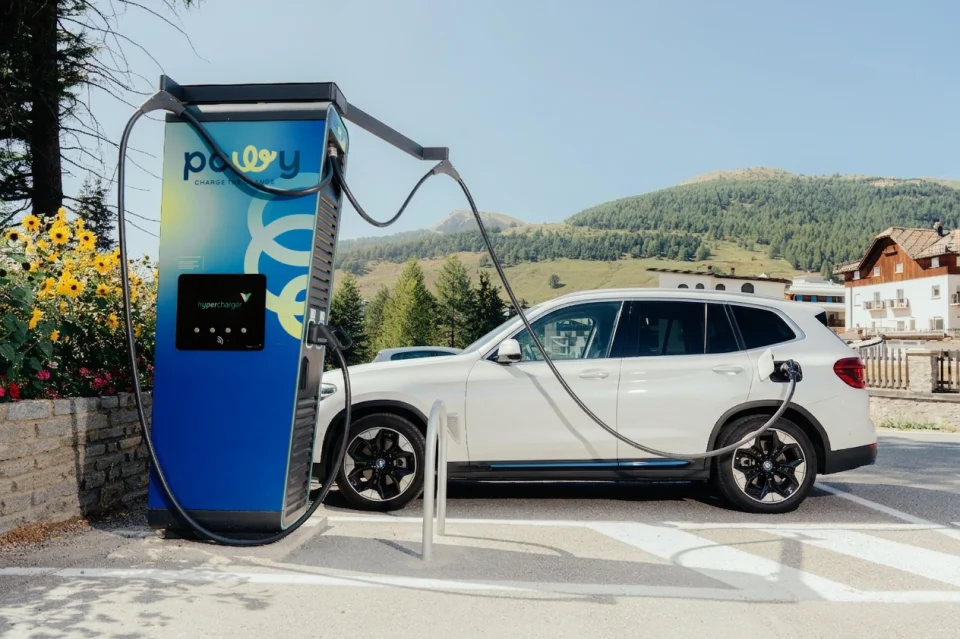
One of the most common questions asked by those new to electric vehicles concerns charging in the city: where to find a charging station, how it works, and whether it’s always available. The good news is that by 2026, the Italian network had reached73,047 public charging points, with8,656 new installations in 2025 alone—a result that brings Italy closer to the levels seen in France, Germany, and the United Kingdom.
The distribution is not yet even: most of the infrastructure is concentrated in the north, while the south has lower coverage. However, the situation is improving rapidly even in the southern regions. In large cities, finding your way around is much easier today than it used to be: this guide will help you do just that.
Three main categories of charging in the city
Before delving into the specifics of each context, it is helpful to distinguish three broad categories of urban charging.
- Public street charging:charging stations installed on public property, accessible to anyone via an app, RFID card, or QR code. They are located in public parking lots, squares, designated parking areas, etc.
- Destination charging:charging stations located in private or semi-public spaces—such as supermarkets, shopping malls, hotels, and restaurants—where charging is a service offered to visitors. It is sometimes free or included in the cost of shopping or accommodation.
- Corporate charging:charging stations in office and company parking lots, accessible to employees, contractors, and visitors. This is a rapidly growing sector, driven by the electrification of vehicle fleets and corporate wellness programs.
Understanding this distinction helps clarify both the access procedures and the costs, which may vary from one context to another.
Public charging stations on the street: the urban network
Public street charging stations are the backbone of urban charging. They are located inpublic parking lots,dedicated parking areas, andsquares, and are increasingly being integrated into cityblue-line parking zones, with spaces reserved for vehicles charging. In cities, AC charging stations AC 7 to 22 kW are most common, suitable for charging sessions lasting 1–4 hours, while in larger urban centers and along major thoroughfares, there are also50–150 kW DC chargersfor those who need to quickly restore their vehicle’s range.
The cities with the most extensive networks areRomeandMilan, which lead the national rankings in terms of the number of charging stations, but coverage is good in all regional capitals. Coverage, however, drops significantly in medium-sized and small cities, especially from central Italy southward.
In Italy, there are several players in the charging sector: some operate exclusively asCPOs(Charge Point Operators), installing and managing the network without a proprietary user interface; others are bothCPOs and e-MSPs(mobility service providers), and therefore also have their own app that users can use to locate charging stations, start and pay for charging sessions, as is the case with Powy itsPowy app.
Supermarkets and shopping centers: charging while shopping
One of the most convenient options by far is charging atlarge retail parking lots, where you can charge your vehicle while you shop without adding any extra stops to your day. Today, it’s almost harder to find a supermarket without a charging station than one with one: coverage has grown significantly across the country.
Powy, for example, partners with numerous large-scale retail chains such asTigros, select stores in thePAC 2000A Conadnetwork, and theMaiora Despar Centro Sud network, bringing mobile charging services to local locations that people visit every day.
One thing to keep in mind: most of these charging stations provideAC to 22 kW, which is ideal for stops lasting 1–2 hours. They may be occupied during peak hours, so it’s always a good idea to check availability via the app before you arrive.
In some large shopping centers,charging is taking on a new form. Alongside traditional AC charging stations, DC are becoming more common, designed for shorter charging times and high turnover, ideal for those who stop just long enough for lunch or a quick shopping trip.
Powy a presence in dozens of shopping centers across Italy, offering charging stations with varying power outputs and tailoring its infrastructure to local consumer habits: each region has its own unique dynamics, and properly scaling the charging infrastructure is key to maximizing its use.
Hotels, restaurants, and lodging facilities
Hotels serve as a natural charging point for electric vehicle drivers: an overnight stay of 8–10 hours is ideal for a full charge, even with a simple 7–11 kW wallbox, without the need for high-power infrastructure. In Italy, the number of equipped facilities is still lower than in Northern Europe, but the trend is growing rapidly.
To get a sense of how widespread hotels with charging stations have become, simply apply the relevant filter on Booking.com or similar platforms: while the percentage is still low compared to the total number of accommodations, for a growing number of travelers, the availability of a charging station has become a key factor in their decision-making— no longer just a nice-to-have.
Some restaurants and coworking spaces also offer charging as a service—often for free or included in the price—making them particularly appealing to those traveling by electric car.
Offices and businesses: charging while you work
Corporate charging is one ofthe fastest-growingsectors in the urban landscape. Employees who work on-site and have access to a charging station in the parking lot can charge their vehicles for 7–8 consecutive hours, ensuring their cars are fully charged by the end of the daywithout any additional stops.
It is also one ofthe most popular employee benefitsamong employees who own electric vehicles, with relatively low costs compared to other employee benefits. Companies that are installing this infrastructure are opting for solutions that include RFID-based or app-based access control systems, usage tracking for individual users, and fully remote management.
How to find charging stations and how to charge your vehicle
Finding an available and working charging station is much easier today thanks to various digital tools. Among the most widely used are:
- PUN Maps(National Single Platform – MASE): the official map of all public charging stations in Italy, showing power output, connectors, operator, and real-time status. It is the most comprehensive official source available.
- Google Maps: integrates charging station search into everyday navigation, which is useful for those who prefer not to install dedicated apps.
- Carrier apps, such asPowy : they show availability and prices and allow you to start charging directly from the app, whether on the carrier’s network or on those of interoperable roaming partners.
Once you’ve found a charging station, starting the charging process is as simple as making a payment with your smartphone. The available methods are becoming increasingly accessible: they range from RFID cards (simply hold the card near the station to start the session) to QR codes you can scan, all the way to standard charging apps, whether from the operator or interoperable partners.
Terminals equipped with physical POS terminals are also becoming increasingly common, allowing customers to pay directly by credit card without having to register or download anything.
The industry is clearly moving toward increasingly intuitive experiences, designed to be accessible to everyone, including those trying electric vehicles for the first time.
A habit, not a problem
Charging in the city works best when it becomesa habit integrated into your daily routine. Those who charge while running errands, at work, or during a planned stop never end up spending extra time on it.
The key is to stop thinking of charging as “refueling”—something you have to do on purpose, like filling up with gas—and start seeing it as something that happenswhile you’re already doing something else.
Whether you’re anelectric vehicle driverlooking for a charging station or abusiness partnerwanting to install charging infrastructure on your premises, Powy . With over2,200 charging points in public and private parking lots, supermarkets, shopping centers, hotels, and urban areas across more than 200 Italian municipalities, the Powy network already Powy a widespread presence throughout the country and continues to grow every month.
Download Powy to charge your vehicle wherever you are, orcontact usif you’d like to install a charging station: from government agencies to private companies, we handle everything.
FAQ: Frequently Asked Questions About Charging Electric Cars in the City
Can you charge without an RFID card or an app?
Yes. Many charging stations in Italy allow access via QR code: simply scan it with your smartphone’s camera and pay by credit card directly through your browser. Contactless credit card payments directly at the charging station are also becoming increasingly common, with no registration required. Some networks are also testing the Plug&Charge protocol (ISO 15118), which allows charging to start and authenticate automatically simply by plugging in the cable, without any user interaction. Despite these innovations, charging via card or app remains the most widely used method today.
About Powy

Powy a company that owns, develops, and manages Italy's leading independent network of public charging infrastructure for electric vehicles.
Founded in Turin, Italy in 2018, Powy is at the center of the transition to more sustainable mobility, offering an innovative charging infrastructure that uses only 100 percent renewable energy.
Powy 's network includes quick, fast, and ultra-fast charging solutions strategically placed in public and private parking lots, supermarkets, shopping malls, and transportation hubs to ensure maximum convenience and accessibility for EV drivers. Each station is equipped with advanced technologies to provide a reliable and efficient charging experience.
Learn more: wpowy.energy