Published on
Why municipalities should install Charging Stations: 5 strategic reasons

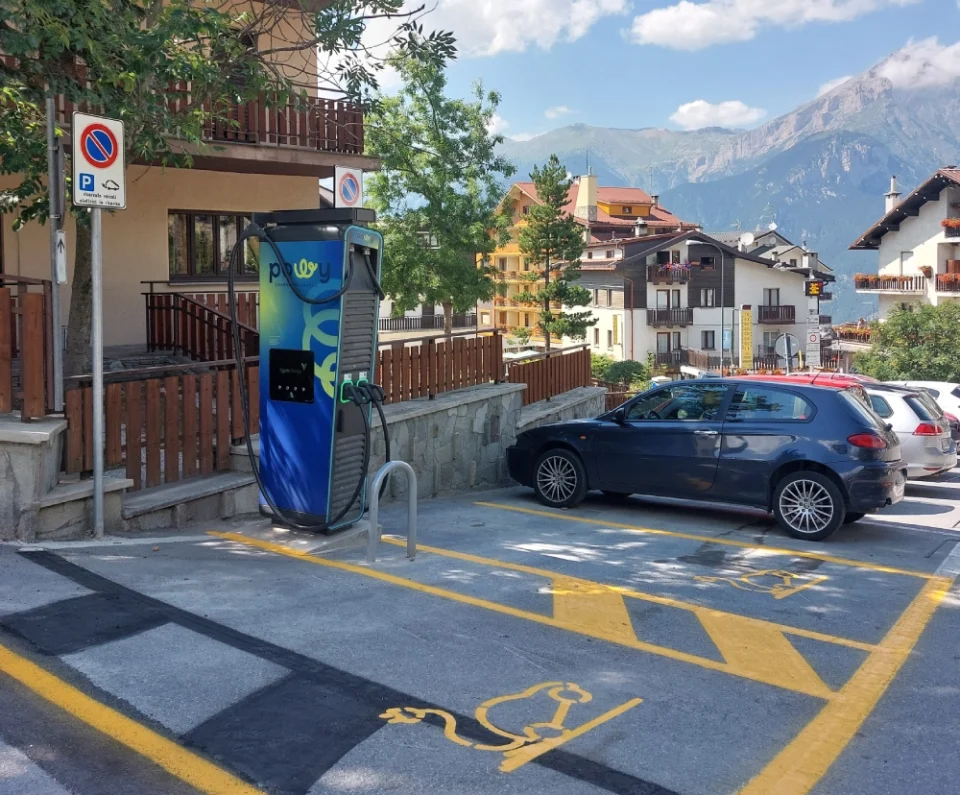


The installation of Charging Stations electric vehicles has become a strategic priority for Italian municipalities. It is no longer just a matter of following a trend, but a forward-looking choice that brings concrete benefits to the area, citizens, and the local economy.
Here are five strategic reasons why every municipality should invest in electric charging infrastructure.
National and European regulations are increasingly pushing towards the transition to electricity. Legislative Decree 48/2020 (which transposes the European directive on energy efficiency in buildings) has strengthened the requirements for new buildings and major renovations with regard to the provision for the installation of charging stations. Municipalities are responsible for transposing these rules into local building regulations and facilitating their application.
In addition, the National Recovery and Resilience Plan (PNRR) has funded the installation of over 21,000 new fast and super-fast charging stations, while the new European AFIR Regulation imposes stringent dynamic targets on installed power (guaranteeing 1.3 kW for every electric car on the road).
Municipalities that anticipate these investments position themselves as modern and competitive entities, creating infrastructure that attracts funding and promotes development. A municipality that strategically plans its charging network demonstrates administrative vision and attracts citizens, businesses, and visitors who are oriented toward sustainable mobility.
A municipality with adequate charging infrastructure automatically becomes more attractive. Electric vehicle owners choose their destinations based on the availability of charging stations: a medieval village, a seaside resort, or a city of art with well-distributed charging points becomes a preferred destination.
Electric tourism is a rapidly growing segment with high added value. Travelers with electric cars tend to stay longer in places that offer these services: while their cars are charging, they visit shops, restaurants, and local attractions. Installing charging stations in historic centers, museums, and park-and-ride facilities means increasing revenue for the local economy.
The transition to electric mobility is crucial for decarbonization. Municipalities, being responsible for air quality, have a direct interest in promoting zero-emission vehicles.
Air pollution causes tens of thousands of premature deaths every year in Italy. Many cities regularly exceed the PM10 and NO2 limits imposed by the EU, risking infringement proceedings. A widespread charging infrastructure lowers the main barrier to purchasing an electric vehicle—the so-called "range anxiety"—encouraging more and more citizens to make the switch. More electric cars on the road means:
Although the public network now covers 93% of Italian municipalities (Motus-E data), the transition to electric vehicles still risks remaining a privilege for the few if left exclusively to the private market: coverage within individual cities and distribution at the national level remain highly uneven. Those who live in apartment buildings, rented accommodation, or suburban areas are entirely dependent on public infrastructure to charge their vehicles. Municipalities are the only actors capable of ensuring that sustainable mobility is a right accessible to all.
Installing charging stations in residential neighborhoods and suburbs means democratizing electric mobility, bridging the gap between those who can charge at home and those who depend exclusively on the public network. This approach is fully consistent with the principles of the European Just Transition, which makes access to many funds conditional on the protection of social equity.
Municipalities own fleets of vehicles (local police, social services, maintenance) that can benefit directly from electrification. By installing charging stations at municipal offices, the administration can:
For a municipality that wants to invest in charging infrastructure, the process involves specific steps:
Does your municipality want to accelerate the transition to more sustainable and modern mobility?
Powy public administrations at every stage of the project: from preliminary analysis to strategic planning, from infrastructure installation to ongoing management and maintenance.
Thanks to an integrated approach and consolidated experience in the sector, we support municipalities in creating efficient, reliable charging networks that generate value for the local area.
Contact us to start a discussion and work together to build a tailor-made plan for your municipality.
The cost depends on the model chosen, the number of charging stations, and the characteristics of the local area. In many cases, through concession agreements or partnerships with private operators, the investment can be fully or largely covered by the operator, thereby reducing or eliminating the municipality’s direct financial burden.
Ideal locations are identified through a feasibility study that analyzes various factors: the availability of sufficient power on the local electrical grid (to avoid complex excavation and wiring work), the presence of public parking lots accessible 24 hours a day, and proximity to Points of Interest (POIs) such as historic districts, municipal offices, commercial areas, and tourist attractions.

Powy a company that owns, develops, and manages Italy's leading independent network of public charging infrastructure for electric vehicles.
Founded in Turin in 2018, Powy is at the forefront of the transition to more sustainable mobility, offering an innovative charging infrastructure that uses only renewable energy.
Powy 's network includes quick, fast, and ultra-fast charging solutions strategically placed in public and private parking lots, supermarkets, shopping malls, and transportation hubs to ensure maximum convenience and accessibility for EV drivers. Each station is equipped with advanced technologies to provide a reliable and efficient charging experience.
Press Office: press@powy.energy